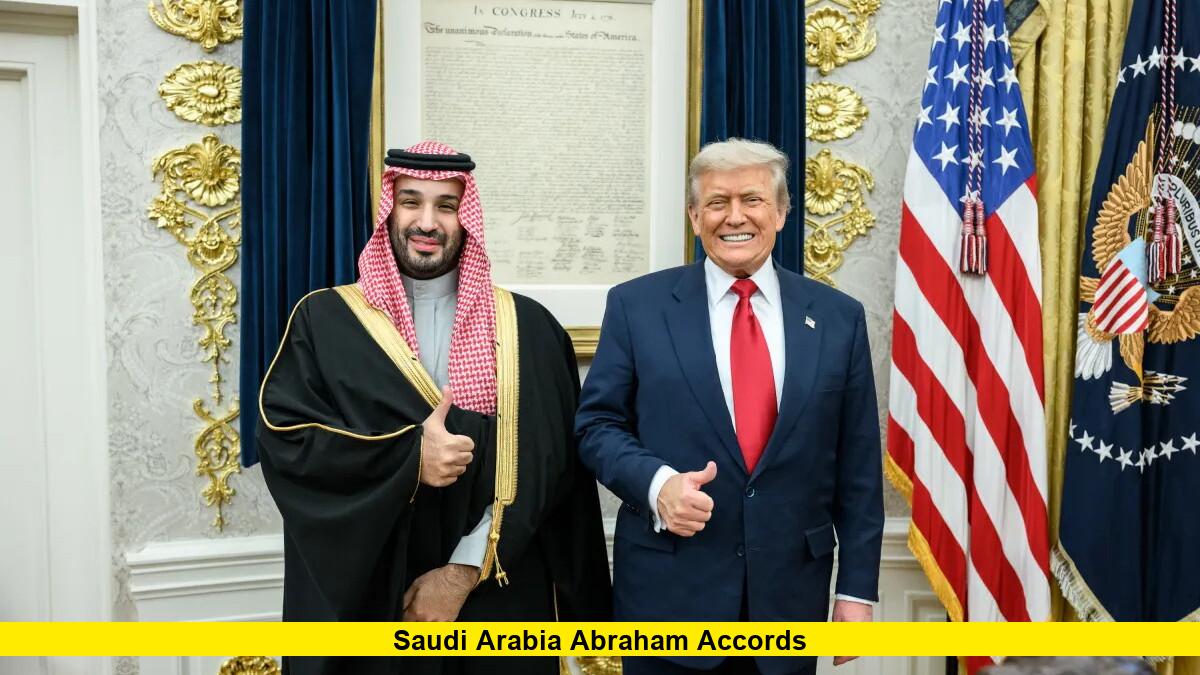
Saudi Arabia and the Abraham Accords remain one of the most closely watched diplomatic storylines in the Middle East, and the topic has surged back into headlines this week after a major U.S.-Saudi nuclear cooperation deal became publicly tied to the question of Israeli normalization. Nearly six years after the original Abraham Accords brought Israel together with the United Arab Emirates, Bahrain, and later Morocco and Sudan, Saudi Arabia has still not signed on, even though it has been treated for years as the accords’ biggest potential prize. As of late July 2026, the kingdom’s position remains complicated by regional conflict, shifting alliances, and unresolved questions about the Palestinian issue.
What the Abraham Accords Are and Why Saudi Arabia Matters
The Abraham Accords were first brokered in 2020 during Donald Trump’s first term, establishing formal diplomatic relations between Israel and several Arab and Muslim-majority nations that had previously withheld recognition. The UAE and Bahrain were the first Gulf states to join, and their participation was seen as a historic break from the long-standing Arab League position that normalization should follow, not precede, a resolution to the Israeli-Palestinian conflict.
Saudi Arabia was never a signatory, but it has consistently been described by American officials as the ultimate goal of the accords framework because of its size, oil wealth, and religious significance as home to Islam’s two holiest sites. Bringing Riyadh into the fold would fundamentally reshape the region’s diplomatic map, which is why every U.S. administration since 2020 has pushed, in one form or another, for Saudi accession.
Saudi officials have repeatedly said that any move toward normalizing ties with Israel would need to be tied to progress on Palestinian statehood, a position that has held steady even as talks around other economic and security arrangements have advanced separately.
Latest Updates: Nuclear Deal Reignites the Normalization Debate
The most significant recent development came this week, when the United States and Saudi Arabia signed a civil nuclear cooperation agreement, often referred to as a “123 agreement,” along with a bilateral safeguards agreement. U.S. Energy Secretary Chris Wright and Saudi Energy Minister Prince Abdulaziz bin Salman formally signed the deal, which is intended to lay the legal groundwork for a decades-long, multibillion-dollar partnership giving American companies priority access to Saudi Arabia’s nuclear energy program.
Just a day after that agreement was finalized, President Trump added a new and unexpected condition. He said on social media that Saudi Arabia would not be permitted to enrich uranium under the deal and that the broader nuclear partnership is “totally subject to Saudi Arabia joining the very respected and successful Abraham Accords.” This statement effectively links a major economic and energy agreement to the long-stalled question of Saudi-Israeli normalization, a connection that had reportedly been removed from earlier versions of the nuclear talks.
Reporting in the days leading up to the signing had suggested the nuclear pact was being deliberately “delinked” from the normalization question, so Trump’s comments came as a surprise to many observers, including some in Israel, where the move raised questions about how firm this new condition actually is and whether it reflects official U.S. policy or a personal position stated after the fact. There is no official confirmation from the Saudi government on how it intends to respond to this specific condition, and it remains unclear whether the requirement will be written into the formal legal text that Congress is set to review over the next 90 days.
Trump has said in prior interviews that he expects an expansion of the Abraham Accords and hopes Saudi Arabia will eventually join, adding that he believes other countries would follow once Riyadh does. However, hope and expectation from Washington have not translated into a formal Saudi commitment, and the kingdom has given no indication that it is prepared to normalize relations with Israel in the near term.
Regional Conflict Has Complicated the Path to Normalization
Much of what has shifted Saudi Arabia’s calculus in 2026 traces back to a period of intense regional conflict involving Iran earlier in the year. Gulf Abraham Accords members, particularly the UAE and Bahrain, absorbed significant Iranian missile and drone fire during this period, with the UAE alone facing hundreds of ballistic missiles and thousands of drones aimed at Gulf states. Bahrain reported debris damage near residential areas and its international airport. Saudi Arabia itself was also struck, including damage to the Ras Tanura petroleum complex, underscoring how the conflict touched every major Gulf power regardless of their formal ties to Israel.
In the aftermath, Saudi Arabia appeared to broaden its strategic options rather than move closer to the Abraham Accords framework. Riyadh convened a quartet of foreign ministers from Saudi Arabia, Pakistan, Turkey, and Egypt in March 2026, holding several ministerial meetings within a single month. Analysts have described this grouping as a form of regional hedging, giving Saudi Arabia alternative security partnerships that reduce the urgency of a U.S.-brokered Israeli normalization deal. Riyadh also pursued closer ties with Qatar and expanded defense cooperation with Turkey during this window, further diversifying its regional relationships.
These developments do not rule out eventual Saudi participation in the Abraham Accords, but many regional analysts now describe the timeline as considerably longer and less certain than it appeared just a year or two ago. Some have noted that if conditions shift again, particularly around a Palestinian political track or a clearer resolution to Iranian threats, the likelihood of Saudi accession could rise once more. For now, though, this remains speculative, and no Saudi official has confirmed a firm intention to join.
The Palestinian Statehood Condition Remains Central
Saudi Arabia’s public position has not changed despite the intensifying pressure from Washington. Riyadh has said clearly in past statements that normalization with Israel would not proceed without a credible pathway to Palestinian statehood. This condition has become one of the defining features of the Saudi approach to the Abraham Accords, distinguishing its stance from the UAE and Bahrain, which normalized relations without requiring a Palestinian state as a precondition.
Whether this position will hold firm under the weight of a major nuclear cooperation deal is one of the central open questions right now. Saudi Arabia has strong economic incentives to secure the nuclear partnership, which is expected to be worth billions of dollars and could support the kingdom’s Vision 2030 diversification plans by reducing dependence on oil for domestic energy needs. At the same time, the kingdom has shown little public appetite for compromising on its Palestinian statehood requirement, even as other Gulf countries have taken different approaches to the region’s diplomatic realignment.
Public and Regional Interest in the Story
Interest in Saudi Arabia’s potential entry into the Abraham Accords tends to spike whenever U.S. officials make public comments tying the two issues together, as happened again this week. The topic draws attention not only in the United States and Israel but also across the Gulf, where governments are watching closely to see whether Saudi Arabia’s decisions might reshape the broader regional order established since 2020.
Analysts and commentators have pointed out that framing the Abraham Accords as a “positive incentive” rather than a “negative trade-off” may be a more effective long-term approach than directly conditioning unrelated economic agreements, such as the nuclear deal, on normalization. This distinction has become part of the broader public debate as observers try to assess whether Trump’s latest comments represent a genuine shift in negotiating strategy or a rhetorical flourish following an already-signed agreement.
Congress is expected to review the nuclear pact’s full details over a 90-day period, and lawmakers from both parties have signaled they want more clarity on the deal’s provisions, including whether enrichment capabilities will ultimately be permitted and how the Abraham Accords condition might be formalized, if at all. Until that review concludes, much of the public discussion around Saudi Arabia and the Abraham Accords is likely to remain focused on interpretation rather than confirmed policy.
Final Thoughts
Saudi Arabia’s relationship with the Abraham Accords continues to be shaped by a mix of economic opportunity, regional security concerns, and firm public commitments around Palestinian statehood. The kingdom has not joined the accords, and there is no official confirmation that it plans to do so in the immediate future, despite renewed pressure from President Trump tying a major nuclear cooperation agreement to eventual normalization with Israel. Regional conflict earlier in 2026 appears to have pushed Riyadh toward diversifying its alliances rather than accelerating a move toward Israel, even as Washington continues to describe Saudi accession as central to the accords’ long-term success.
Whether the coming months bring a breakthrough or further delay will likely depend on how the Palestinian statehood question evolves, how Congress handles its review of the nuclear agreement, and whether Saudi Arabia’s broader regional strategy continues to favor hedging over commitment. For now, the situation remains fluid, and anyone following the story should expect further developments as officials in Washington, Riyadh, and the region respond to this week’s statements.
Stay tuned for more updates on this developing story, and share your thoughts in the comments below.