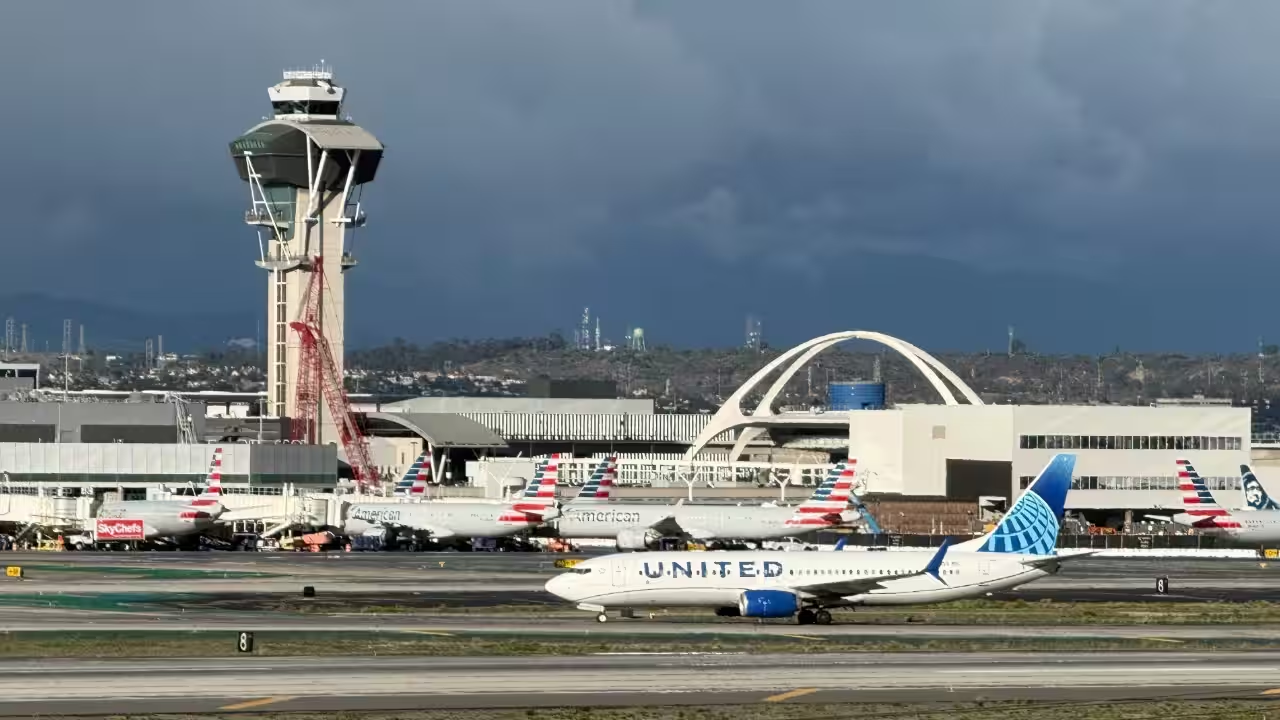
An apparent FAA software update pushed to a critical air traffic control communications network triggered a four-and-a-half-hour nationwide ground stop on Friday, November 13, 2026. While the Federal Aviation Administration lifted the departure freeze at 8:15 p.m. ET after verifying system stability, severe flight delays and cancellations continue to ripple across U.S. airports on Saturday as airlines scramble to untangle displaced crews and grounded aircraft.
By early Saturday morning, aviation tracking data showed more than 10,000 flights delayed and over 9,000 canceled across Friday’s travel window, with more than 3,200 additional Saturday flights already scrubbed as carriers work to reset their schedules. Federal officials emphasized that the incident was a mechanical and technical failure rather than a cyberattack, yet the fallout has renewed urgent debate in Washington over modernizing America’s decades-old aviation infrastructure.
How an FAA Software Update Overloaded Aging Air Traffic Routers
The disruption began at 3:36 p.m. ET on Friday when telecommunications failures hit multiple regional Air Route Traffic Control Centers (ARTCCs) and terminal radar approach control facilities nationwide. Out of an abundance of caution, the FAA halted all departing flights across the United States while safely guiding roughly 3,500 aircraft already in the air to their destinations or diversion airports.
While an official root-cause investigation remains ongoing, federal officials and briefing sources point to a cascading technical failure:
- The Private Telecom Network: The outage struck the FAA Telecommunications Infrastructure (FTI), a dedicated private network operated by defense contractor L3Harris Technologies that links radar sites, radio frequencies, and control centers nationwide.
- The Software Trigger: According to federal law enforcement and aviation sources, a routine software update and new security patches introduced into the network forced key components to reboot.
- Legacy Hardware Bottleneck: Transportation Secretary Sean Duffy and Homeland Security Secretary Markwayne Mullin explained that the resulting surge of status data overwhelmed legacy switches and 1980s-era analog copper lines, producing inconsistent radar and communications data that forced technicians to shut the system down.
Confirmed Facts vs. Ongoing Investigation: Officials have confirmed there is no evidence of a cyberattack, foreign interference, or foul play. Both the Department of Homeland Security and private vendors also confirmed the outage had no connection to Thursday’s Microsoft 365 service disruption or the FAA’s recently deployed AI traffic-routing tools. However, the FBI and the National Security Agency are assisting technical teams to formally verify the exact software patch responsible.
Airport-by-Airport Impact and Weekend Travel Chaos
Even though U.S. airspace reopened Friday night, the logistical domino effect is far from over. Airlines rely on tightly choreographed rotations where a single aircraft and flight crew operate four to six legs per day. Freezing departures for more than four hours left planes stranded at the wrong hubs and pushed pilots and flight attendants past federally mandated duty-time limits.
Major U.S. hubs experiencing the heaviest bottlenecks include:
- Midwest & East Coast Hubs: Chicago O’Hare (ORD)—where early network routing anomalies reportedly propagated—along with New York’s JFK, Newark (EWR), Philadelphia (PHL), and Charlotte Douglas (CLT) saw massive gate saturation and hundreds of stranded passengers.
- West Coast & Southern Gateways: San Francisco (SFO), Los Angeles (LAX), Houston Bush Intercontinental (IAH), and Orlando (MCO) faced lingering ground delay programs and acute crew shortages heading into Saturday morning.
- Sports and Event Travel: The grounding stranded multiple NBA, NHL, and NCAA college football and basketball teams ahead of weekend matchups. Secretary Duffy noted the FAA is actively coordinating with collegiate athletic departments to prioritize Saturday charter departures, while NFL teams scheduled for Sunday games largely avoided Friday’s freeze.
You can monitor live airport ground stops, terminal delays, and airspace advisories directly through the FAA National Airspace System Status portal.
What Stranded Travelers Need to Know Right Now
If you are scheduled to fly this weekend—or are still waiting to be rebooked from Friday—aviation consumer advocates and airlines recommend taking immediate steps rather than waiting in terminal lines:
- Check Flight Status Before Leaving Home: Major carriers including Delta, United, American, Southwest, and JetBlue have issued flexible travel waivers, allowing passengers to rebook onto later flights without paying change fees or fare differences.
- Know Your Federal Refund Rights: Under U.S. Department of Transportation rules, if your flight is canceled or significantly delayed and you choose not to travel, your airline is legally required to provide a prompt, automatic cash refund—not just a travel voucher—even if you purchased a non-refundable basic economy ticket.
- Request Meal and Hotel Vouchers: While weather delays rarely trigger extra compensation, a federal infrastructure and airline scheduling meltdown often prompts carriers to offer meal vouchers or distressed-traveler hotel rates upon request at customer service desks. Keep all receipts for out-of-pocket expenses.
- Track Inbound Aircraft: Use your airline’s mobile app or public flight trackers to see where your incoming plane is located; if the inbound aircraft has not yet departed its previous city, your flight will likely face rolling delays.
What Happens Next: $50 Billion Overhaul Push Before Thanksgiving
Friday’s meltdown—only the third nationwide FAA ground stop in U.S. history, following September 11, 2001, and the January 2023 NOTAM system outage—comes less than two weeks before the peak Thanksgiving holiday travel rush.
Secretary Duffy assured travelers that airlines and air traffic controllers expect normal operations to be fully restored well ahead of Thanksgiving week, with the bulk of the current backlog expected to clear by late Sunday or Monday. At the same time, both the White House and Congress are seizing on the failure to push for structural reform. Duffy called on lawmakers to approve $50 billion in emergency modernization funding to replace aging copper lines and legacy switches, while the U.S. Senate Committee on Commerce, Science, and Transportation confirmed it will open a formal review into the resilience of primary and backup air traffic control frequencies.
Were your travel plans caught in the FAA ground stop—share your airport experience in the comments below and follow our live coverage for real-time weekend flight updates.