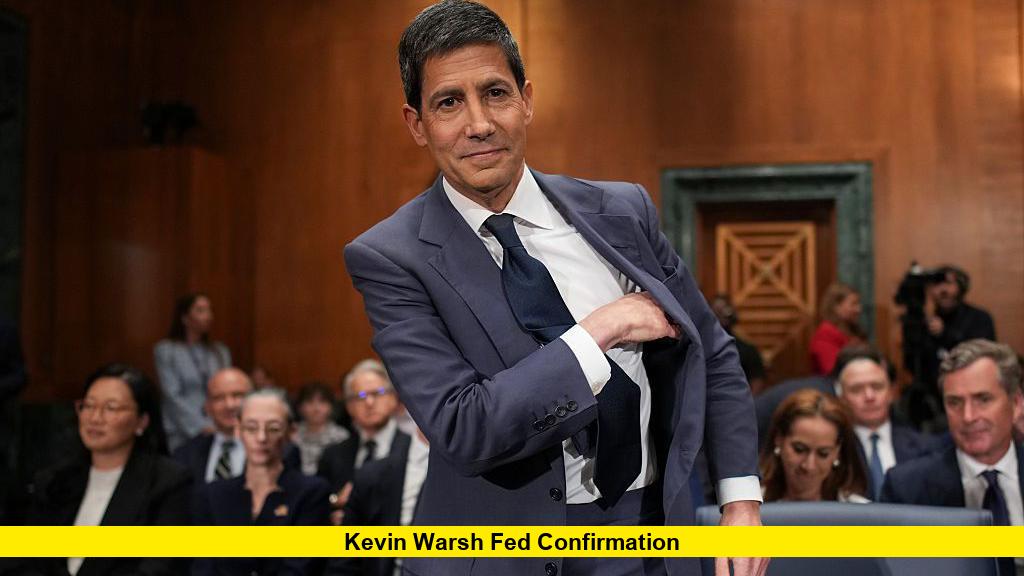
The Kevin Warsh Fed confirmation hearing delivered one of the most intense Federal Reserve nomination showdowns in recent years, with lawmakers pressing the nominee on independence, financial ties, and future monetary policy direction.
Held before the Senate Banking Committee, the hearing quickly turned contentious as senators from both parties raised concerns about political influence, financial disclosures, and the central bank’s role in the economy. Warsh, a former Federal Reserve governor, repeatedly stressed that monetary policy decisions must remain independent from the White House, according to reporting from NTD.
Stay informed on major economic shifts—share this update and follow ongoing developments as they unfold.
Heated exchanges dominate the hearing
Much of the tension centered on accusations that Warsh could be influenced by political pressure. Some lawmakers questioned whether he would act independently, especially given expectations from political leaders for lower interest rates.
Warsh firmly rejected those claims, stating that monetary policy independence is essential and that he would not take direction from elected officials on rate decisions. He also clarified that no promises had been made regarding cutting interest rates, as per coverage from the New York Post.
Financial disclosures and scrutiny over wealth
Another major flashpoint involved Warsh’s financial background. His disclosed wealth—exceeding $100 million—drew attention from lawmakers concerned about potential conflicts of interest.
Senators pressed him on investment transparency and possible connections to controversial entities. In response, Warsh pledged to divest holdings that could present conflicts within a set timeframe if confirmed, according to Business Insider.
Policy direction: Smaller Fed and economic outlook
Warsh used the hearing to outline key policy views, including his stance on reducing the Federal Reserve’s balance sheet. He argued that the current size of Fed holdings distorts markets and creates unnecessary ties between the central bank and financial institutions.
He suggested that a smaller balance sheet could support lower inflation and potentially allow for lower interest rates over time, though he did not provide a detailed implementation plan, according to Reuters.
Warsh also expressed optimism about artificial intelligence, saying it could boost productivity and help ease inflationary pressures in the long run, as per Business Insider.
Political roadblocks threaten confirmation timeline
Despite Republican backing, Warsh’s path to confirmation remains uncertain. A key senator has indicated he may delay the process over unrelated disputes involving the Federal Reserve, complicating the timeline for a final vote.
The current Fed chair is expected to remain in place until at least mid-May if no successor is confirmed, according to Business Insider.
Market reaction and broader implications
Financial markets closely tracked the hearing, with stocks briefly pulling back as investors reacted to Warsh’s remarks on policy independence and interest rates.
The outcome of the confirmation process could have significant implications for future rate decisions, inflation strategy, and the broader direction of U.S. monetary policy, according to MarketWatch.
What comes next
The Senate Banking Committee must first advance Warsh’s nomination before a full Senate vote can take place. With political tensions high and questions still unresolved, the confirmation battle is far from over.
For now, the hearing has underscored deep divisions over the Federal Reserve’s independence and its role in shaping the U.S. economy.
What do you think about the future of the Federal Reserve under new leadership? Share your thoughts and keep checking back for updates.