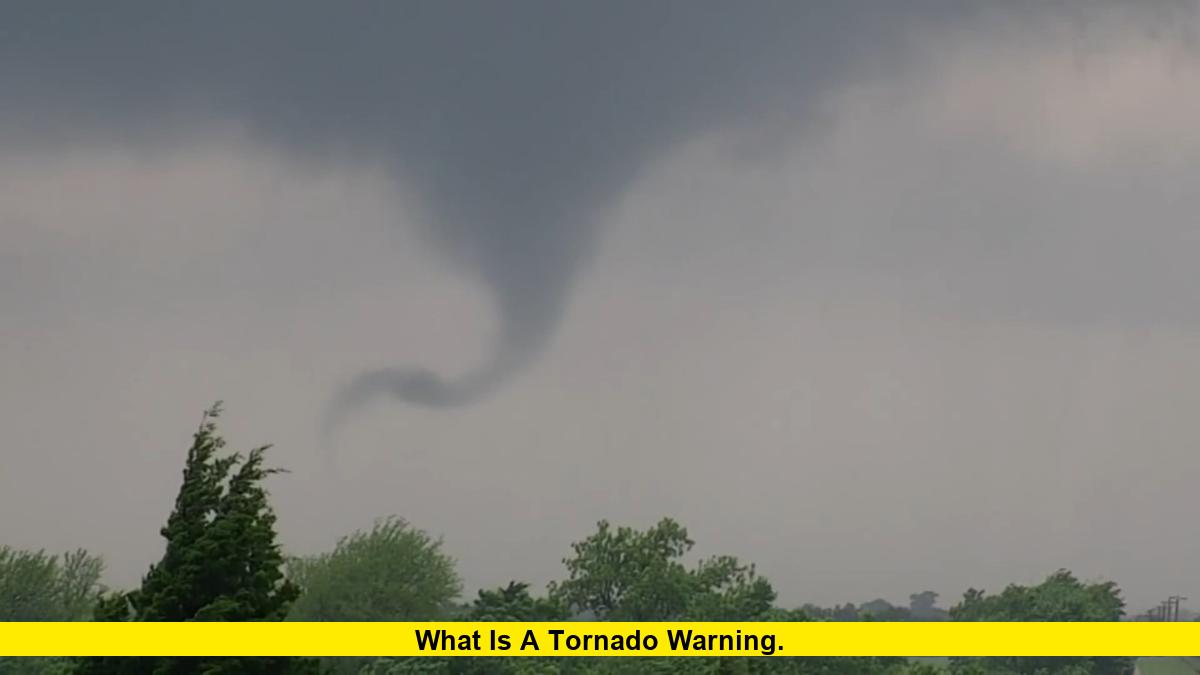
Severe weather alerts can appear suddenly on phones, televisions, and emergency radios during powerful storms. Many Americans receive these alerts but may not fully understand their meaning. So what is a tornado warning and why do meteorologists treat it as one of the most urgent weather alerts issued in the United States?
A tornado warning is an emergency notification that a tornado has either been visually reported or detected by weather radar. When this alert is issued, people located in the affected area face an immediate threat from a dangerous storm capable of producing destructive winds and flying debris. Officials urge residents to move to shelter without delay.
Tornado warnings are designed to provide the last line of defense before a storm strikes. While modern technology has improved detection and forecasting, tornadoes can still develop quickly, leaving only minutes for communities to react.
Why Tornado Warnings Are So Urgent
Tornadoes are among the most violent storms on Earth. Their rotating columns of air can generate winds exceeding 100 miles per hour, sometimes much stronger. These powerful winds can level homes, flip vehicles, and scatter debris across large areas.
Because tornadoes can appear suddenly within severe thunderstorms, early warning systems are essential. The tornado warning alert is the signal that danger is no longer just possible — it may already be happening nearby.
Communities located across the central United States, the Southeast, and parts of the Midwest frequently experience tornado outbreaks during the spring and early summer months. However, tornadoes can occur during any season if atmospheric conditions align.
How Meteorologists Detect Tornado Threats
Weather experts rely on sophisticated radar systems to monitor storms across the country. These radar networks scan the atmosphere continuously and can identify rotation inside thunderstorms that may signal tornado development.
When radar indicates strong rotation or trained observers report a tornado on the ground, forecasters issue a tornado warning for the areas expected to be impacted by the storm.
These warnings usually cover specific counties or smaller sections of a state rather than broad regions. The goal is to alert the communities directly in the storm’s path so residents can take immediate protective action.
In many cases, warnings are issued only a short time before a tornado reaches a town or neighborhood. Even a brief warning period can help people move to safer locations.
Understanding the Difference Between Watches and Warnings
Severe weather alerts often include two terms that sound similar but mean very different things: tornado watch and tornado warning.
A tornado watch means weather conditions are favorable for the development of tornadoes. Storms capable of producing tornadoes could form in the region, so residents should stay alert and monitor updates.
A tornado warning signals a much higher level of urgency. It indicates that a tornado has been detected or is strongly indicated by radar. When this warning is issued, immediate shelter is necessary.
The distinction between the two alerts is critical. A watch means preparation should begin, while a warning means action should already be underway.
How Americans Receive Tornado Warnings
Emergency alert systems are designed to deliver tornado warnings as quickly as possible. When a warning is issued, the alert may appear through multiple channels at the same time.
Smartphones often display wireless emergency alerts that include a loud tone and vibration. Television and radio stations interrupt programming to broadcast the warning. Weather radios provide automated alerts for severe storms, and many communities also activate outdoor warning sirens.
These layers of notification help ensure people receive the message even if one system fails or goes unnoticed.
For families, enabling emergency alerts on mobile devices can make a significant difference during overnight storms when traditional sirens may not be heard indoors.
Where to Go During a Tornado Warning
Once a tornado warning is issued, safety experts emphasize that people should move to shelter immediately.
The safest locations are typically on the lowest level of a strong building. Basements offer excellent protection when available. If a basement is not accessible, interior rooms such as bathrooms, closets, or hallways can provide safer spaces away from windows.
Key safety guidelines include:
- Stay on the lowest floor of the building
- Avoid windows and exterior walls
- Use heavy furniture or mattresses for protection if possible
- Cover your head and neck to guard against debris
Mobile homes are particularly vulnerable during tornadoes. People living in these structures should move to a nearby sturdy building or designated storm shelter as soon as warnings are issued.
Vehicles also provide little protection. Drivers caught on the road should seek shelter in a building if possible.
Why Tornado Preparedness Matters
Every year, severe weather produces hundreds of tornadoes across the United States. While many are short-lived and relatively weak, some storms cause significant damage and threaten entire communities.
Preparedness plays a major role in reducing injuries and fatalities. Emergency officials encourage families to discuss tornado safety plans before severe weather strikes.
Simple preparation steps include identifying a safe room, keeping emergency supplies available, and ensuring everyone in the household understands where to go when warnings are issued.
Schools, workplaces, and public facilities often conduct tornado drills to reinforce these safety habits.
Tornado Risk Across the United States
Although tornadoes can occur in many regions, certain areas face a higher frequency of these storms.
The central United States — often referred to as “Tornado Alley” — includes parts of Texas, Oklahoma, Kansas, Nebraska, and South Dakota. These states frequently experience the atmospheric conditions that support tornado formation.
Another region known for frequent tornado activity stretches across parts of the Southeast. This area sometimes sees tornadoes embedded within fast-moving storm systems, which can make detection more difficult.
In recent years, meteorologists have also observed tornado activity occurring outside traditional regions, reminding residents nationwide to stay aware of severe weather alerts.
The Role of Technology in Tornado Safety
Advancements in weather technology have significantly improved tornado detection. Modern Doppler radar systems allow meteorologists to identify storm rotation more quickly than earlier forecasting tools.
In addition, high-resolution satellite imagery, storm-tracking software, and networks of trained weather spotters help forecasters analyze developing storms in real time.
These technologies help improve warning lead times, giving communities more opportunities to seek shelter before a tornado arrives.
Despite these advances, tornadoes remain unpredictable. Rapid storm development means warnings may still be issued with limited notice.
Community Awareness Saves Lives
Public education has become an essential part of tornado safety efforts across the United States. Schools, emergency agencies, and local governments regularly share information about severe weather preparedness.
Understanding what is a tornado warning and how to respond quickly can dramatically improve survival during dangerous storms.
Residents are encouraged to monitor weather forecasts during severe storm seasons and keep alerts enabled on their phones. Even experienced storm watchers should treat every warning as a serious situation.
When a tornado warning appears, seconds matter. Acting immediately can protect lives and reduce the risk of injury.