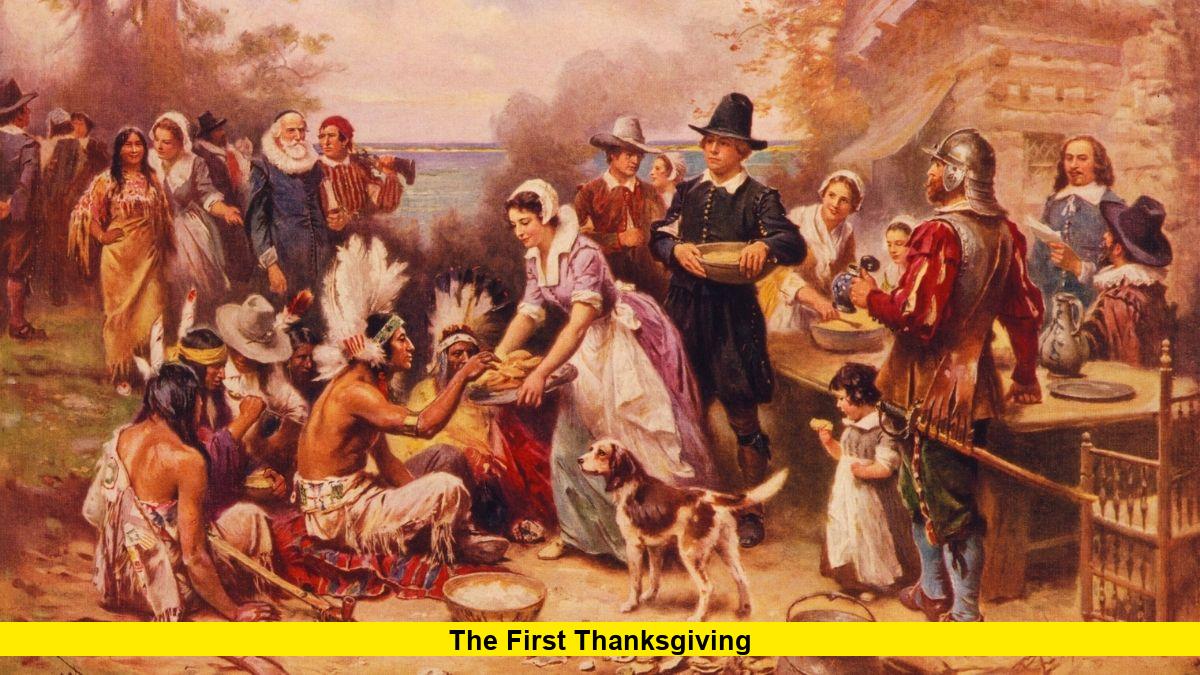
The first Thanksgiving refers to the three-day harvest celebration held in autumn 1621 at Plymouth Colony in present-day Massachusetts. Surviving English settlers who had arrived on the Mayflower the previous year gathered with members of the Wampanoag people after their first successful harvest. Roughly 50 to 53 English colonists and about 90 Wampanoag men, led by their sachem Massasoit (also known as Ousamequin), took part. The event was a diplomatic gathering rooted in an alliance formed earlier that year, not a religious holiday or the modern national observance Americans know today.
Primary Sources Confirm the 1621 Gathering
Only two contemporary accounts describe the event. Edward Winslow, a Mayflower passenger, wrote a letter in December 1621 that was published the following year in Mourt’s Relation. He recorded that after the harvest, Governor William Bradford sent four men out hunting. They returned with enough fowl to feed the company for nearly a week. During the celebration, which included the firing of muskets, Massasoit arrived with about 90 men. The Wampanoag hunted and brought five deer to the settlement. The English entertained and feasted their guests for three days.
William Bradford later described the autumn of 1621 in Of Plymouth Plantation, noting that the colony had recovered in health and strength, with stores of fish, fowl (including wild turkeys), venison, and Indian corn. Neither account uses the word “Thanksgiving.” For the Separatists (later called Pilgrims), a formal day of thanksgiving was a religious observance of prayer and fasting. The 1621 gathering was a secular harvest festival in the English tradition, combined with practical diplomacy.
Who Attended and Why the Alliance Mattered
The English participants were all Mayflower survivors. After a harsh first winter in which nearly half the original group died, only about 50 colonists remained—mostly men, along with four married women and a larger number of children and teenagers. No other ships arrived until after the celebration.
The Wampanoag contingent of roughly 90 men reflected both the size of the settlement’s needs and the strategic importance of the relationship. Earlier in 1621, the two groups had signed a treaty of mutual aid. European diseases had devastated Wampanoag communities in the years before the Pilgrims’ arrival, shifting the regional balance of power. The alliance offered mutual protection. Massasoit’s village lay some distance from Plymouth, and the large delegation’s arrival—possibly prompted in part by the sound of gunfire—underscored the careful diplomacy of the moment. Primary accounts come only from the English side; no Wampanoag written records of the gathering survive.
What Was Eaten at the First Thanksgiving
No detailed menu exists, but the primary sources and colonial conditions point to a meal of local foods. The English provided fowl from their hunt—likely waterfowl such as ducks and geese, with wild turkey available in the area according to Bradford. The Wampanoag contributed five deer. Corn, taught to the settlers by the Wampanoag and fertilized with fish, was a staple. Seafood including fish and shellfish was abundant and familiar to the English. Vegetables and other native plants rounded out the table. There were no potatoes, no cranberry sauce as prepared today, and no pumpkin pies or other desserts requiring ovens and refined sugar, both of which were scarce or unavailable.
Readers interested in the documented foods of the 1621 harvest can find a clear breakdown in this detailed account of the dishes served at the first Thanksgiving.
From Harvest Feast to National Holiday
The 1621 event was a one-time harvest celebration. Plymouth’s first recorded religious day of thanksgiving occurred in 1623 after rain ended a drought. Days of thanks continued sporadically in New England colonies for generations. The modern national holiday took shape much later. President George Washington issued the first presidential Thanksgiving proclamation in 1789. In 1863, amid the Civil War, President Abraham Lincoln formally established an annual national day of thanksgiving on the last Thursday in November, following years of advocacy by magazine editor Sarah Josepha Hale. Congress fixed the date as the fourth Thursday in November in 1941.
The association of the modern holiday with the 1621 Plymouth feast developed in the 19th century as the story entered popular history. While earlier thanksgiving observances occurred in other European settlements in North America, the Plymouth gathering is the one most closely linked in American tradition to the holiday’s harvest and fellowship themes. For a full timeline of when the event occurred and how historians confirm it, see this complete guide to the year of the first Thanksgiving.
What the Records Do—and Do Not—Tell Us
Historians emphasize that many popular images of the first Thanksgiving come from later art and retellings rather than primary evidence. The gathering was outdoor, practical, and shaped by the needs of survival and alliance. Exact dates within the autumn of 1621, specific seating arrangements, and the full range of activities remain unknown. What is documented is a three-day period of shared food, recreation, and the maintenance of a critical early relationship between the English settlers and the Wampanoag.
Authoritative primary-source summaries are maintained by the Pilgrim Hall Museum, which presents the Winslow and Bradford accounts in context. Broader historical perspective on how local harvest traditions evolved into the national holiday appears in resources from the Library of Congress and the National Archives. The National Park Service also documents Lincoln’s 1863 proclamation that established the annual observance at the Lincoln Home National Historic Site.
Why the First Thanksgiving Still Matters
For contemporary Americans, the first Thanksgiving serves as a reminder of both cooperation and complexity in early colonial history. It highlights the role of Indigenous knowledge in the colony’s survival, the fragility of early alliances, and the long process by which a local harvest festival became a national day of gratitude. Families today mark the holiday with meals, travel, and traditions that have changed substantially since 1621, yet the core impulse of pausing to acknowledge a successful harvest and shared community remains recognizable.
As Thanksgiving approaches each year, the documented details of 1621 offer a grounded starting point for understanding the holiday’s origins without relying on later myths.
What part of the first Thanksgiving story do you find most interesting—share your thoughts in the comments and stay updated on more American history.