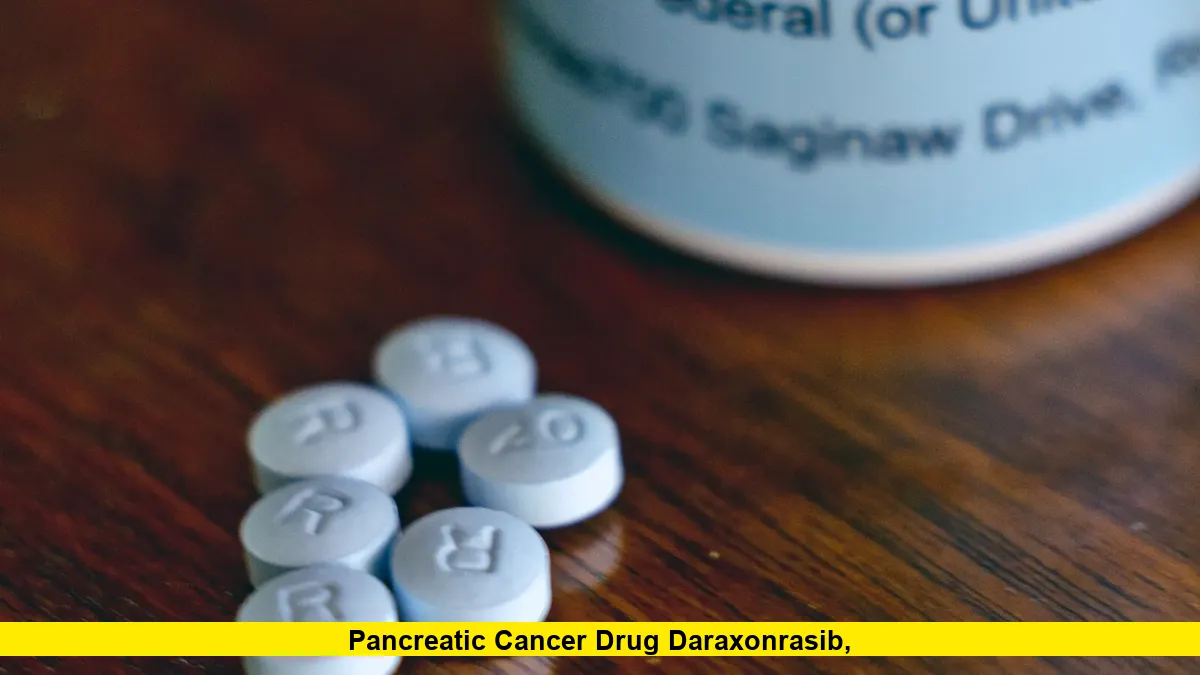
The pancreatic cancer drug daraxonrasib is now FDA-approved and sold in the U.S. as Rasonque. The agency approved it on August 26, 2026 for adults with metastatic pancreatic adenocarcinoma who have received at least one prior systemic therapy or can’t receive multiagent systemic therapy. In the pivotal trial, patients lived a median of 13.2 months on the pill, versus 6.7 months on standard chemotherapy. This week, new data on using it as a first treatment drew fresh attention to the drug.
What Is Daraxonrasib (Rasonque)?
Daraxonrasib is a once-daily oral tablet made by Revolution Medicines. It is the first RAS-targeted therapy approved for pancreatic cancer. RAS is the main cancer-driving pathway in most pancreatic tumors, and drug developers have struggled to block it for decades.
The drug is a “RAS(ON) multi-selective inhibitor.” It works by linking RAS to a second protein called cyclophilin A, which stops RAS from sending growth signals. Earlier RAS drugs mostly targeted a rare mutation in pancreatic cancer. Daraxonrasib is designed to work against the common RAS mutations found in this disease.
Who Is Daraxonrasib Approved For?
The FDA approval covers metastatic pancreatic adenocarcinoma, the most common form of the disease. Eligible adults are those who:
- have already received at least one prior systemic therapy, or
- are not candidates for multiagent systemic therapy.
Daraxonrasib is not approved to prevent pancreatic cancer, and it is not approved as a first treatment for newly diagnosed patients. The first-line use is still being tested.
RASolute 302 Trial Results: How Much Did It Help?
The approval rests mainly on RASolute 302, a randomized phase 3 trial of 500 patients whose cancer had progressed after one earlier treatment. Half received daraxonrasib and half received physician’s-choice chemotherapy.
- Median overall survival: 13.2 months vs. 6.7 months
- Median progression-free survival: 7.2 months vs. 3.6 months
- Objective response rate: 30% vs. 11%
- Risk of death: about 60% lower with daraxonrasib
Dr. Brian Wolpin of Dana-Farber Cancer Institute, who led the trial, called the results the most significant advance in metastatic pancreatic cancer in decades. He also stressed that daraxonrasib is not a cure.
Dosage and Side Effects
The recommended dose is 300 mg taken by mouth once daily until the cancer progresses or side effects become unacceptable. The most common side effects include:
- Rash
- Diarrhea
- Mouth sores (stomatitis)
- Nausea, vomiting and abdominal pain
- Fatigue and swelling (edema)
- Decreased appetite and bleeding
The prescribing information also warns about serious skin and soft-tissue toxicity, gastrointestinal perforation, lung inflammation (interstitial lung disease or pneumonitis) and harm to an unborn baby. Anyone considering the drug should talk through these risks with their oncology team.
How Much Does Rasonque Cost in the U.S.?
The list price is $39,800 for a 30-day supply, or about $477,600 for twelve months, before discounts, rebates or assistance. Most patients will not pay that amount. The manufacturer’s (ON)Path program offers insurance navigation and financial help, including copay support for eligible commercially insured patients.
Because Rasonque is a pill taken at home, Medicare generally covers it under Part D rather than Part B. Out-of-pocket costs depend on your plan’s formulary and drug tier. Medicare’s cancer treatment coverage guide explains how Part D handles cancer drugs and how to compare plans.
Revolution Medicines reported $197.6 million in Rasonque net revenue for the quarter ending September 30, covering roughly five weeks of sales. That suggests demand has been strong since launch.
New First-Line Results Announced This Week
On November 20, researchers presented updated phase 1/2 data at the EORTC-NCI-AACR Symposium in Barcelona. The trial, RMC-GI-102, tested daraxonrasib at a lower 200 mg dose plus gemcitabine and nab-paclitaxel in 61 patients with newly diagnosed metastatic disease. The results:
- 60.7% confirmed objective response rate, including complete responses in 8.2% of patients
- 90.2% disease control rate
- 12.8 months median progression-free survival
- 11.1 months median duration of response
These numbers are encouraging, but this was a small, single-arm study with no chemotherapy-only comparison group. It does not show that the combination beats chemotherapy alone, and the FDA has not approved it for first-line use. A randomized phase 3 trial now listed on ClinicalTrials.gov is comparing daraxonrasib alone and with chemotherapy against chemotherapy in newly diagnosed patients.
Is Daraxonrasib Available Outside the U.S.?
Not yet. In October, the European Medicines Agency’s CHMP adopted a positive opinion recommending approval for patients who have had at least one prior therapy. A final European decision had not been reported as of this writing. The FDA reviewed the application with Health Canada under Project Orbis, a framework for coordinated cancer-drug review.
What Else Is Being Studied?
Researchers are testing whether daraxonrasib can help earlier in the disease. According to the American Cancer Society, other trials are evaluating it as a first treatment, alone or with chemotherapy, and as a way to keep cancer from returning after surgery. Scientists are also studying why tumors eventually stop responding and which drug combinations might overcome that resistance. Research centers involved include Dana-Farber in Boston, MD Anderson in Houston, Weill Cornell in New York and Huntsman Cancer Institute in Utah.
Why Pancreatic Cancer Treatment Needs New Options
Pancreatic cancer is among the deadliest cancers. Federal estimates projected about 67,530 new U.S. diagnoses and 52,740 deaths in 2026. The five-year relative survival rate is just 13.7%, largely because the disease is often found late. For families facing an advanced diagnosis, this guide to what terminal cancer means explains prognosis, symptom management and support options.
What Patients and Families Should Do Next
- Ask about eligibility. Ask your oncologist whether you meet the approved criteria and how Rasonque compares with other options.
- Check your coverage early. Call your Part D or commercial plan about formulary status, prior authorization and specialty pharmacy requirements.
- Contact the manufacturer’s support program. Ask about financial and insurance help before starting treatment.
- Plan for side effects. Skin, mouth and digestive symptoms are common, so ask your team how they would be managed.
- Look into clinical trials. Newly diagnosed patients may be able to join studies testing daraxonrasib earlier in treatment.
- Think about comfort and goals of care. Palliative care can run alongside active treatment, and this overview of terminal cancer care and life expectancy covers what families should know.
This article is for general information and is not medical advice. Treatment decisions should be made with a qualified oncology team.
What to Watch Next
- Results from the randomized first-line phase 3 trial, which will show whether adding daraxonrasib to chemotherapy improves survival. No readout date has been announced.
- A final European decision on approval.
- Whether the FDA expands the approved use if later trials succeed.
- Real-world data on how patients tolerate the drug outside clinical trials.
Have you or someone you love been affected by pancreatic cancer? Share your thoughts in the comments and check back for the latest updates on daraxonrasib.