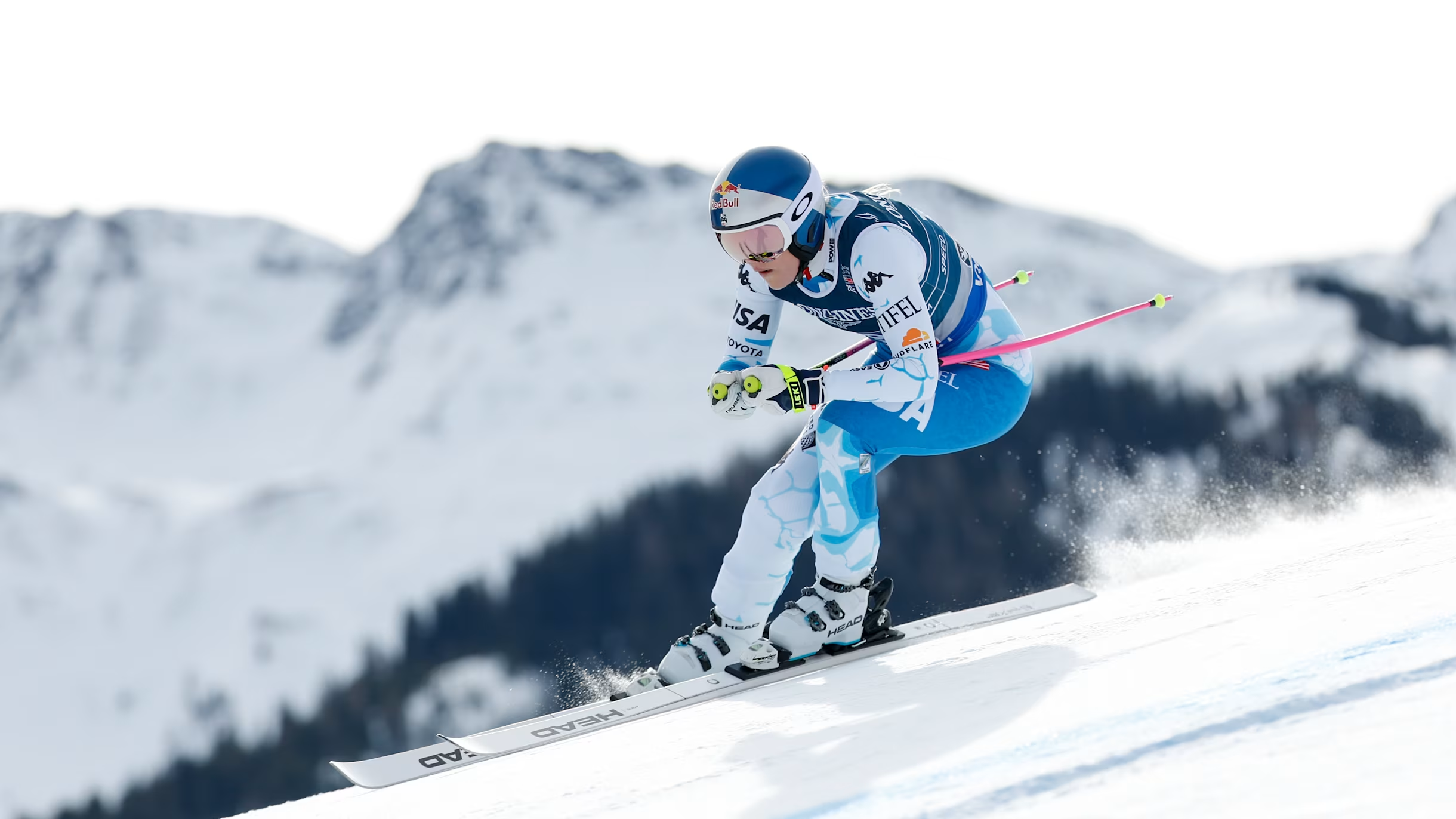
Lindsey Vonn comeback training secrets are at the center of global attention after the American alpine skiing icon delivered one of the most remarkable performances in modern winter sports. At age 41, Vonn returned from retirement, overcame major knee surgery, and surged back to the top of the World Cup podium, proving that elite performance is still possible well beyond traditional athletic timelines.
Her return is not a feel-good story built on nostalgia. It is a case study in elite preparation, calculated risk-taking, and relentless discipline. Verified results from this season confirm that Vonn’s comeback is real, measurable, and historically significant.
This in-depth report breaks down how she rebuilt her strength, reshaped her training approach, and mentally prepared herself to compete — and win — against skiers half her age.
A Comeback That Redefined Age in Alpine Skiing
Lindsey Vonn’s return to World Cup competition culminated in a downhill victory that sent shockwaves through the sport. By winning at 41, she became the oldest alpine skier to claim a World Cup race win, setting a new benchmark for longevity at the sport’s highest level.
This victory marked her first World Cup win since 2018 and added another milestone to an already historic career. More importantly, it validated months of intense preparation that many doubted could deliver results at this stage of her life.
Vonn didn’t return to the circuit to “see what happens.” She returned with a clear goal: to be competitive again and build toward the 2026 Winter Olympics in Italy.
Rebuilding the Body After Retirement and Surgery
One of the most challenging aspects of Vonn’s return was rebuilding a body that had endured years of wear, injuries, and surgeries. After stepping away from competition, she underwent knee surgery that required extensive rehabilitation before she could even consider racing again.
Strategic Muscle Development
Rather than aiming to simply regain her old form, Vonn made a deliberate choice to change her physical profile. Over the offseason, she added significant lean muscle mass, gaining roughly 12 pounds. This added strength gave her more stability at high speeds and better control through aggressive downhill turns.
Her training emphasized:
- Lower-body strength for impact absorption
- Core stability to manage centrifugal forces
- Upper-body conditioning for balance and pole control
This approach reduced strain on her joints while increasing power output, a critical factor in downhill racing where skiers exceed 80 miles per hour.
Precision Over Volume
Unlike younger athletes who can tolerate massive training loads, Vonn’s program focused on precision. Sessions were carefully planned to maximize gains without unnecessary fatigue. Recovery was treated as seriously as training, with structured rest days and mobility work built into her schedule.
Year-Round On-Snow Preparation
A defining element of Vonn’s comeback was her commitment to staying on snow year-round. Rather than limiting herself to the traditional Northern Hemisphere season, she traveled extensively to train in the Southern Hemisphere during the summer months.
Training camps in countries like New Zealand and Chile allowed her to maintain race-specific conditioning while refining technical details. These sessions focused on:
- Speed maintenance
- Line selection at race pace
- Adapting to varying snow textures
This constant exposure to downhill conditions gave her an edge when the World Cup season resumed, allowing her to start strong rather than needing weeks to regain form.
Equipment Choices That Made the Difference
At the elite level, equipment decisions can determine race outcomes. Vonn spent months testing skis, bindings, and boots to find the setup that best matched her renewed physical condition.
One notable decision involved returning to a familiar boot model after experimenting with newer designs. The choice prioritized responsiveness and confidence over novelty. In downhill skiing, trust in equipment is essential, especially at high speeds where hesitation can cost valuable time.
Her approach reflected a broader theme of her comeback: blending modern training science with lessons learned from decades at the top of the sport.
A New Coaching Perspective
Another crucial factor in Vonn’s resurgence was her collaboration with former Olympic and World Cup champion Aksel Lund Svindal. Their partnership introduced a fresh tactical lens to her training and racing strategy.
Rather than overhauling her technique, the focus was on refinement:
- Improving glide efficiency
- Adjusting body positioning for sustained speed
- Identifying sections where minimal changes could yield major gains
Svindal’s experience in men’s downhill racing, where speed and line choice are paramount, helped Vonn unlock small advantages that added up over the course of a run.
Mental Discipline and Competitive Mindset
Physical readiness alone does not win World Cup races. Vonn’s mental approach was equally decisive in her comeback.
After years away from competition, she returned with a calmer, more deliberate mindset. She emphasized consistency, patience, and staying present in the process rather than obsessing over outcomes. This mental clarity allowed her to focus on execution rather than external pressure.
She also restructured her lifestyle during the season, limiting distractions and staying in one place long enough to establish routine and rhythm. That stability translated into confidence at the start gate.
Racing Against a New Generation
One of the most compelling aspects of Vonn’s return is that she is competing — and winning — against a new generation of athletes who grew up watching her dominate the sport.
These younger skiers bring aggressive styles and fearless approaches, forcing Vonn to elevate her own performance. Her ability to adapt without abandoning her strengths has been a key reason for her success.
The results show that experience, when paired with modern training methods, remains a powerful competitive advantage.
Momentum Toward the 2026 Winter Olympics
With her World Cup victory secured, attention now turns to what lies ahead. Vonn has made it clear that her comeback is not limited to a single race. She plans to compete in downhill, Super-G, and team events as she builds toward the 2026 Winter Olympics in Milan-Cortina.
Her recent performances indicate that she remains competitive across multiple disciplines, not just her signature downhill. That versatility strengthens her case as a legitimate Olympic contender.
Why Lindsey Vonn Comeback Training Secrets Matter
Lindsey Vonn comeback training secrets resonate far beyond alpine skiing. Her return challenges assumptions about age, recovery, and peak performance. It demonstrates how intelligent training, strategic planning, and mental resilience can extend elite careers.
For athletes across sports — and for anyone pursuing long-term fitness goals — her story offers a powerful reminder that reinvention is possible with the right approach.
A Legacy Still Being Written
Lindsey Vonn’s career was already legendary before this comeback. What she is doing now adds a new chapter that may ultimately be just as impactful as her earlier dominance.
She is no longer just a symbol of winning — she is a model of perseverance, adaptability, and elite preparation. As the season continues, fans and competitors alike will be watching closely to see how far this extraordinary return can go.
What do you think about Lindsey Vonn’s historic return to the World Cup? Share your perspective and keep following as her remarkable season continues.