The question around the gen z age range continues to trend across the United States as businesses, educators, and policymakers try to understand one of the most influential generations today. Generation Z is widely recognized as the group born after Millennials and before Generation Alpha, but defining the exact age span remains important for marketing, workforce planning, education, and cultural analysis.
In 2026, demographic research groups, government data, and major social research organizations broadly place Generation Z among individuals born from the late 1990s through the early 2010s. This means Gen Z currently includes teenagers, college students, and young adults already shaping workplaces and consumer behavior across the country.
If you want to understand how this generation influences technology, jobs, and spending, knowing the age boundaries provides the starting point.
Discover how Gen Z is reshaping everything from social media trends to hiring practices — and why age definitions matter more than ever.
What Is the Official Gen Z Age Range in 2026?
There is no government-defined or legally official age range for Generation Z. However, the most widely accepted definition among researchers, universities, businesses, and media organizations identifies Gen Z as people born between 1997 and 2012. Based on that framework, Generation Z is approximately 14 to 29 years old in 2026.
Although some organizations use slightly different birth years, the 1997–2012 range remains the most frequently referenced benchmark in demographic studies, workforce research, consumer reports, and marketing analysis. It provides a consistent way to compare age groups, even though generational boundaries are intended as analytical tools rather than strict scientific categories.
One reason Gen Z stands apart is that its members grew up during a period of rapid technological transformation. Unlike Millennials, who experienced the transition from analog to digital life, most Gen Z members have known a world where high-speed internet, smartphones, streaming platforms, social media, and cloud-based technology have always existed. Their childhood and teenage years were shaped by mobile devices, digital communication, online learning, and algorithm-driven content.
However, Generation Z is far from a uniform group. The experiences of someone born in 1997 differ dramatically from those of someone born in 2012. In 2026, the oldest Gen Z adults are entering leadership roles, buying homes, starting families, and advancing their careers, while the youngest members are still in middle or high school. These differences influence spending habits, political views, education, career priorities, and technology use.
Researchers often divide Gen Z into two broad segments:
- Older Gen Z (born 1997–2004): Mostly college graduates or working professionals navigating careers, housing costs, and financial independence.
- Younger Gen Z (born 2005–2012): Primarily students whose lives have been shaped by online education, short-form video platforms, AI-powered tools, and evolving digital learning environments.
Another defining characteristic is that Gen Z became the first generation to experience major global events during their formative years, including the COVID-19 pandemic, widespread remote learning, rapid advances in artificial intelligence, and the expansion of creator-driven digital economies. These events continue to influence how they approach work, education, finances, and social relationships.
As of 2026, Gen Z is also becoming an increasingly influential demographic. Millions are entering the workforce each year, increasing their purchasing power and shaping trends in technology, entertainment, retail, and employment. Businesses, educators, and policymakers closely monitor this generation because its preferences are expected to have a lasting impact on consumer behavior and workplace culture throughout the next decade.
While the 1997–2012 birth-year definition is the standard reference used in most reports, it’s worth remembering that generational labels are guidelines rather than hard scientific classifications. Individual experiences often vary based on country, culture, socioeconomic background, and personal circumstances, meaning two people at opposite ends of Gen Z may have surprisingly different life experiences despite belonging to the same generation.
Why Birth Years Matter More Than Labels
Generational labels often spark debate, but birth years provide measurable context. The timeline reflects major shared experiences that shape behavior and values.
Key formative influences for Gen Z include:
- The rise of smartphones and app ecosystems
- Social media as a primary communication channel
- Streaming replacing traditional television
- Economic uncertainty following the late-2000s recession
- Remote learning expansion during the COVID-19 pandemic
These events affected the entire generation, even though age differences create variation in perspective.
Older Gen Z members entered the workforce during economic disruption, while younger members experienced pandemic schooling during critical developmental years.
Gen Z Population Size in the United States
Generation Z is one of the largest and most influential generations in the United States. Using the widely accepted 1997–2012 birth-year definition, Gen Z accounts for around one-fifth of the U.S. population, representing tens of millions of Americans. As more members reach adulthood each year, the generation’s influence on the economy, workforce, politics, and consumer markets continues to grow.
The oldest Gen Z members are now in their late 20s, while the youngest are entering their teenage years. This broad age span means the generation is simultaneously filling classrooms, colleges, apprenticeship programs, and workplaces. Over the remainder of the decade, millions more Gen Z individuals will transition into full-time employment, making them one of the primary sources of new talent for U.S. employers.
A Growing Force in the Workforce
Gen Z’s presence in the labor market has expanded rapidly since the early 2020s. Millions of Gen Z adults already work across industries such as healthcare, technology, retail, finance, manufacturing, hospitality, and education. As Baby Boomers continue to retire, employers increasingly rely on Gen Z workers to help address labor shortages and support long-term business growth.
This demographic shift is prompting organizations to rethink traditional workplace practices. Many companies now emphasize:
- Flexible work arrangements and hybrid schedules
- Competitive salaries and transparent career paths
- Mental health and wellness benefits
- Continuous learning and professional development
- Diversity, equity, and inclusion initiatives
- Modern workplace technology and digital collaboration tools
Employers also recognize that Gen Z employees generally expect faster communication, meaningful feedback, and opportunities for career advancement earlier than previous generations.
Rising Consumer Spending Power
Gen Z is becoming an increasingly important consumer group with rapidly expanding purchasing power. As more members secure full-time jobs and disposable income grows, businesses across nearly every industry are adapting their products and marketing strategies to meet Gen Z expectations.
Unlike previous generations, Gen Z consumers often prioritize:
- Authentic and transparent brands
- Sustainability and environmental responsibility
- Digital-first shopping experiences
- Personalized recommendations powered by AI
- Fast delivery and convenient online purchasing
- User-generated content and creator recommendations
- Value for money amid higher living costs
Many purchasing decisions are influenced by social media, online reviews, and recommendations from creators rather than traditional advertising. As a result, brands increasingly invest in influencer partnerships, short-form video content, and community-driven marketing instead of relying solely on television or print campaigns.
Shaping the Future Economy
Economists expect Gen Z’s economic influence to expand significantly throughout the late 2020s and 2030s. As more members enter their peak earning years, they will contribute to higher consumer spending, increased homeownership, greater investment activity, and stronger participation in entrepreneurship.
Industries such as financial technology, healthcare, education, entertainment, travel, electric vehicles, artificial intelligence, and digital services are already adjusting products and services to meet the evolving needs of this generation.
For businesses, understanding Gen Z is no longer optional—it has become a competitive necessity. Companies that successfully align with Gen Z values, communication styles, and digital habits are better positioned to build long-term customer relationships and attract the next generation of employees. As Gen Z’s spending power continues to rise, its preferences will play a major role in shaping the future of the U.S. economy and the global marketplace.
How the Gen Z Age Range Shapes the Workforce
Because Generation Z spans a broad age range—from approximately 14 to 29 years old in 2026—its members occupy nearly every stage of the early career pipeline. While younger Gen Z individuals are still in middle school, high school, or college, older members are already building careers, leading teams, launching businesses, and influencing workplace culture.
Today, Gen Z can be found across multiple workforce stages, including:
- Students preparing for internships and first jobs
- College graduates entering the labor market
- Entry-level employees gaining professional experience
- Early-career professionals pursuing promotions
- Young managers, team leaders, and entrepreneurs running startups or small businesses
This diversity means employers cannot treat Gen Z as a single, uniform employee group. The expectations of a recent high school graduate differ considerably from those of a 29-year-old professional with several years of work experience.
Gen Z Is Becoming a Major Workforce Generation
Throughout the mid-2020s, Gen Z became one of the fastest-growing segments of the U.S. labor force. As millions of Baby Boomers continued to retire, employers increasingly looked to Gen Z workers to fill critical roles across industries including healthcare, technology, finance, manufacturing, retail, education, and public service.
The generation’s growing participation is reshaping recruitment strategies, onboarding programs, and leadership development initiatives. Many organizations now compete for Gen Z talent by highlighting opportunities for professional growth, mentorship, and workplace flexibility rather than relying solely on salary.
What Gen Z Looks for in an Employer
Research consistently shows that Gen Z employees prioritize more than just competitive pay. While salary remains important, many also evaluate employers based on workplace culture, career development opportunities, and organizational values.
Some of the factors Gen Z commonly considers include:
- Competitive compensation and pay transparency
- Flexible schedules and hybrid work options
- Clear opportunities for career advancement
- Ongoing learning, training, and skill development
- Strong mental health and wellness benefits
- Inclusive and diverse workplace cultures
- Meaningful work aligned with personal values
- Regular feedback and open communication from managers
Many younger professionals also expect employers to invest in modern workplace technology that supports collaboration, productivity, and professional development.
A Digital-First Generation at Work
Unlike previous generations, Gen Z entered the workforce after growing up with smartphones, cloud computing, social media, video conferencing, and mobile apps as everyday tools. This digital-first upbringing has shaped how they communicate, solve problems, and collaborate with colleagues.
As a result, many Gen Z employees adapt quickly to:
- Remote and hybrid work environments
- AI-powered productivity tools
- Digital collaboration platforms
- Online learning and professional certification programs
- Flexible, technology-driven workflows
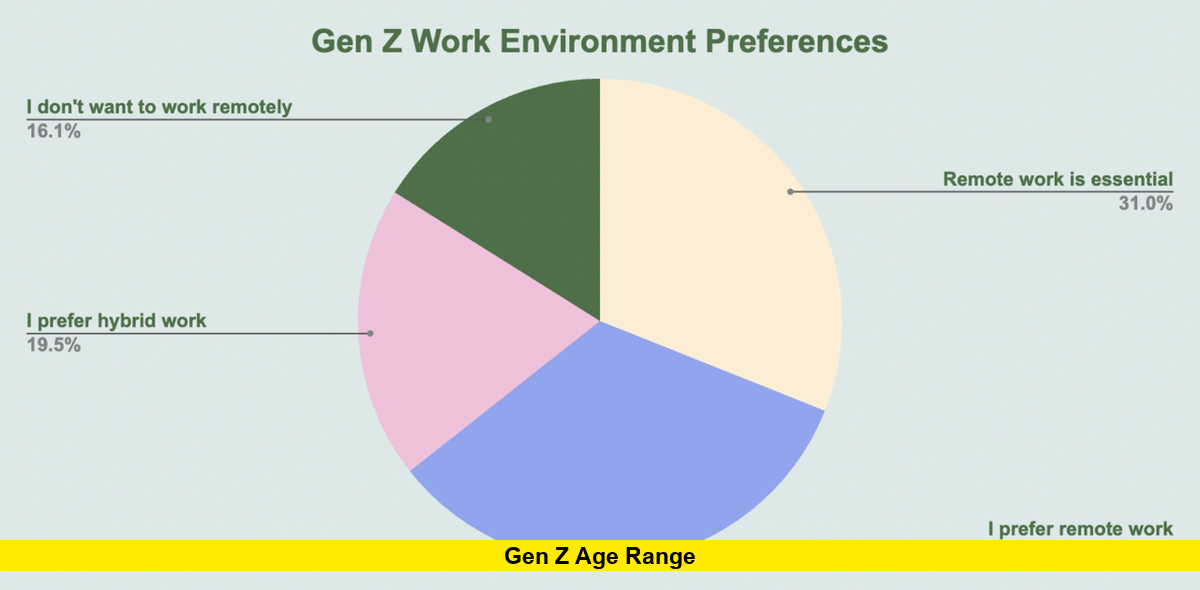
Rather than viewing remote work as a temporary benefit, many Gen Z workers see workplace flexibility as a normal part of modern employment. At the same time, surveys indicate that many also value in-person collaboration, mentorship, and opportunities to build relationships with colleagues—especially during the early stages of their careers.
Education Trends Across Gen Z
Generation Z’s broad age range means its educational experiences vary significantly. In 2026, the youngest Gen Z members are still in middle school or high school, while older members have graduated from college, enrolled in graduate programs, completed apprenticeships, or entered the workforce through vocational and technical training.
Despite these differences, several education trends have emerged across the generation, reflecting changing technology, labor market demands, and economic realities.
Greater Interest in Career-Focused Education
Many Gen Z students are placing a stronger emphasis on education that leads directly to employment. While four-year college degrees remain an important pathway, growing numbers are also exploring alternatives that provide practical skills and faster entry into the workforce.
Popular options include:
- Professional certifications
- Industry-recognized credentials
- Apprenticeships
- Trade and technical schools
- Online certificate programs
- Employer-sponsored training
This shift reflects a growing focus on gaining job-ready skills while managing education costs and reducing student debt.
Demand for High-Growth Careers
Gen Z students are increasingly drawn to industries expected to experience long-term growth and strong employment opportunities. Fields such as healthcare, information technology, cybersecurity, engineering, renewable energy, finance, and artificial intelligence continue to attract significant interest.
Technology-related programs—including software development, data analytics, cloud computing, and AI—remain particularly popular as businesses across nearly every sector expand their digital capabilities. Healthcare careers are also seeing sustained demand due to an aging population and ongoing workforce shortages.
Financial Outcomes Matter More Than Ever
Economic uncertainty, rising tuition costs, inflation, and housing affordability have influenced how Gen Z approaches education. Many students carefully evaluate the return on investment (ROI) of different educational pathways before making decisions about college majors or career training.
As a result, prospective students increasingly consider factors such as:
- Expected starting salaries
- Long-term earning potential
- Employment rates after graduation
- Student loan obligations
- Career stability and job security
- Opportunities for advancement
Rather than pursuing education for its own sake, many Gen Z learners prioritize programs that offer clear career outcomes and practical workplace skills.
AI and Digital Learning Are Becoming Standard
Generation Z is the first cohort to integrate artificial intelligence into everyday learning on a large scale. AI-powered tutoring tools, writing assistants, coding platforms, language-learning applications, and personalized study resources have become common parts of the educational experience.
Alongside AI, students regularly use:
- Learning management systems (LMS)
- Interactive online courses
- Virtual classrooms
- Educational mobile apps
- Video-based learning platforms
- Digital collaboration tools for group projects
These technologies allow students to access learning materials anytime and receive more personalized educational support than previous generations.
Lasting Effects of Remote Learning
The COVID-19 pandemic reshaped education during many Gen Z students’ formative years. Remote and hybrid learning introduced new ways of studying that continue to influence expectations in schools, colleges, and universities.
Many Gen Z learners now expect:
- Flexible learning options alongside traditional classrooms
- Recorded lectures for later review
- Online assignment submission and digital resources
- Virtual office hours and tutoring
- Blended learning that combines in-person and online instruction
While many students value returning to face-to-face classrooms for collaboration and social interaction, they also appreciate the convenience and accessibility that digital learning provides.
Preparing for a Changing Job Market
As artificial intelligence, automation, and emerging technologies continue to transform industries, Gen Z increasingly recognizes that education does not end with graduation. Lifelong learning, continuous upskilling, and professional development are becoming essential parts of career success.
Whether through university degrees, trade certifications, online courses, or employer-sponsored training, Gen Z is embracing more flexible and career-oriented approaches to education. This focus on adaptability is expected to help the generation navigate an evolving workforce where new skills and technologies will continue to shape future employment opportunities.
Technology and Digital Behavior
Generation Z is widely recognized as the first true digital-native generation. Unlike Millennials, who experienced the shift from dial-up internet and desktop computers to smartphones and social media, Gen Z has grown up in a world where high-speed internet, mobile devices, streaming services, and digital communication have always been part of everyday life.
From childhood through adulthood, technology has shaped how Gen Z learns, socializes, shops, works, and consumes information. As a result, the generation’s digital habits continue to influence business strategies, media trends, education, and online culture across the United States.
Social Media Is More Than Entertainment
For many Gen Z users, social media platforms have evolved beyond places to connect with friends. They increasingly serve as discovery tools for information, products, entertainment, and local recommendations.
Many younger consumers use social platforms to:
- Search for product reviews
- Discover restaurants and travel destinations
- Learn new skills through short tutorials
- Follow news and current events
- Research fashion, beauty, and technology trends
- Find recommendations from creators and communities
This shift has prompted businesses to optimize content for social discovery alongside traditional search engines.
Video-First Communication
Video has become one of Gen Z’s preferred forms of communication and content consumption. Short-form videos, livestreams, and visual storytelling often attract more attention than text-based posts.
Popular content formats include:
- Short educational videos
- Product demonstrations
- Behind-the-scenes content
- Livestream shopping
- Creator vlogs
- Interactive video discussions
This preference has encouraged brands, educators, and media organizations to invest more heavily in video-based communication and mobile-friendly content.
The Rise of Short-Form Content
Gen Z helped accelerate the popularity of short-form content, favoring quick, engaging videos and concise information that can be consumed in minutes—or even seconds.
This trend has influenced nearly every digital platform, with businesses adapting by creating:
- Bite-sized educational content
- Quick news updates
- Product highlights
- Short tutorials
- Visual storytelling campaigns
While long-form articles and videos remain valuable for in-depth information, many users first discover topics through shorter formats before seeking additional details.
Building a Multi-Platform Digital Identity
Unlike earlier generations that often focused on one or two major social networks, Gen Z frequently maintains a presence across multiple platforms, using each for different purposes.
For example, users may choose different platforms to:
- Connect with friends and family
- Build professional networks
- Share creative work
- Watch entertainment
- Participate in online communities
- Follow news, sports, or niche interests
This multi-platform approach allows individuals to tailor how they communicate with different audiences while managing various aspects of their online identity.
Early Adoption of Emerging Technology
Gen Z has shown a strong willingness to experiment with new digital tools and technologies. Artificial intelligence, augmented reality, virtual collaboration platforms, digital wallets, and smart devices have quickly become part of everyday life for many members of the generation.
AI-powered applications are increasingly used for:
- Studying and research
- Writing assistance
- Coding support
- Language learning
- Creative design
- Productivity and organization
Because Gen Z is comfortable adopting new technologies, businesses often look to this generation as an early indicator of future digital trends.
How Digital Habits Shape Business and Media
Gen Z’s online behavior has transformed how companies communicate with customers. Traditional advertising alone is no longer enough to capture attention. Instead, brands increasingly focus on:
- Authentic creator partnerships
- User-generated content
- Personalized recommendations
- Interactive experiences
- Mobile-first websites and apps
- AI-powered customer engagement
News organizations have also adapted by delivering information through social platforms, video explainers, podcasts, newsletters, and mobile notifications to reach younger audiences where they spend the most time online.
Different Ages, Different Digital Experiences
Although Generation Z shares many digital characteristics, technology habits vary considerably across its age range. Older Gen Z adults—those in their mid-to-late 20s—often use digital platforms for career networking, financial management, productivity, and professional communication alongside entertainment.
Younger Gen Z members, particularly teenagers, tend to spend more time using social media for education, gaming, creator content, and peer interaction. Their digital experiences have also been shaped by growing up with AI-powered tools and advanced mobile technologies from an earlier age.
Understanding these differences is important for educators, employers, marketers, and policymakers. While Gen Z is often discussed as a single generation, its wide age span means digital behaviors continue to evolve across different life stages, making it one of the most diverse and technologically connected generations in U.S. history.
Spending Power and Consumer Impact
Gen Z’s economic influence continues to expand as more members reach adulthood. Analysts highlight several defining consumer patterns:
- Preference for value and price transparency
- High interest in resale and secondhand markets
- Strong response to brand authenticity
- Digital payment adoption
- Rapid trend cycles driven by social platforms
Older Gen Z adults now make independent financial decisions including housing, insurance, travel, and investing.
This shift explains why brands closely track the gen z age range when forecasting long-term demand.
Cultural Influence of Generation Z
Gen Z drives many cultural shifts in language, fashion, entertainment, and online behavior.
Major areas of influence include:
- Creator economy growth
- Viral trend cycles
- Mental health conversations becoming mainstream
- Workplace boundary discussions
- Identity and representation visibility
Because the age span includes both teenagers and adults, Gen Z culture evolves faster than previous generations.
Younger members often set trends, while older members translate them into business and media.
Differences Inside the Generation
One of the biggest misunderstandings about Gen Z is treating it as a single mindset. The nearly 15-year span creates distinct subgroups:
Older Gen Z (mid-20s to late-20s)
Focused on careers, finances, housing, and long-term stability.
Core Gen Z (late teens to early 20s)
Navigating college, first jobs, and identity exploration.
Younger Gen Z (early teens)
Still in school, shaping future digital and social trends.
These differences explain why messaging that works for one segment may not resonate with another.
How Gen Z Compares With Millennials and Gen Alpha
Understanding generational boundaries clarifies how Gen Z fits between Millennials and Generation Alpha.
- Millennials: Generally born 1981–1996
- Gen Z: Generally born 1997–2012
- Gen Alpha: Generally born 2013 onward
Gen Z acts as a bridge between analog childhood experiences and fully digital childhood experiences.
Older Gen Z remembers pre-streaming media and early social platforms, while younger Gen Z has never experienced a world without algorithm-driven content.
Why the Gen Z Age Range Keeps Trending
Search interest around generational definitions remains high because the age span affects multiple industries:
- Hiring and workforce planning
- Marketing segmentation
- Education policy
- Financial services
- Media strategy
As more Gen Z members age into adulthood, organizations revisit the definition to ensure accurate analysis.
The question is less about labeling and more about understanding behavior, expectations, and economic impact.
The Future Impact of Generation Z
Over the next decade, Gen Z will represent a dominant share of:
- New workforce entrants
- First-time homebuyers
- Digital content creators
- Entrepreneurs
- Parents
Their influence will shape technology adoption, workplace norms, and consumer expectations across industries.
Because the generation spans adolescence through early adulthood, its impact will continue expanding through the 2030s.
Conclusion
Understanding the gen z age range provides critical insight into how the United States is changing. From classrooms to corporate offices, Generation Z is already redefining communication, spending, and career expectations.
The broad age span explains why the generation appears complex — it includes students, creators, and professionals simultaneously shaping culture and the economy.
As more Gen Z members move into leadership roles and financial independence, the importance of accurate age definitions will only grow.
What trends are you noticing about Generation Z? Share your thoughts or check back for more updates on generational shifts shaping everyday life.