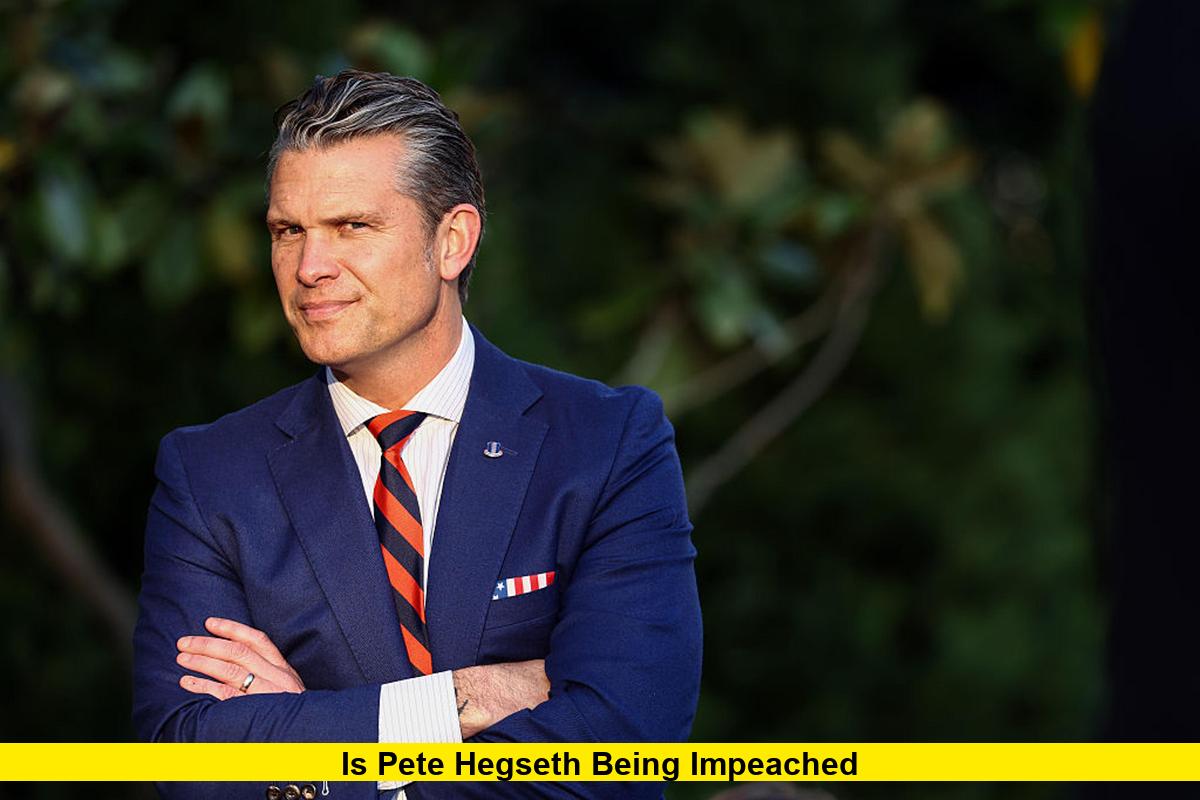
The question “is pete hegseth being impeached” has drawn renewed attention in Washington after lawmakers moved to advance an impeachment effort against Defense Secretary Pete Hegseth. However, the latest development brings an important distinction: Hegseth has not been impeached, and the House of Representatives has taken procedural action that effectively blocks the current effort from reaching a full impeachment vote.
On November 10, 2026, the Republican-controlled House voted 211–204 to refer impeachment articles against Hegseth to the House Judiciary Committee, effectively shelving the resolution for the remainder of the current congressional session. The move prevented an immediate vote on whether to impeach President Donald Trump’s defense secretary.
The resolution, introduced by Republican Representative Thomas Massie of Kentucky, accused Hegseth of serious misconduct connected to U.S. military operations and other actions taken under his leadership at the Pentagon. Hegseth and the Trump administration rejected the effort, describing it as politically motivated.
The outcome gives Hegseth a significant short-term reprieve. Nevertheless, the controversy may not be over. Democrats are expected to have greater congressional power when the new Congress convenes in January 2027, creating the possibility of renewed scrutiny and further impeachment proceedings.
Is Pete Hegseth Being Impeached Right Now?
No. As of November 11, 2026, Pete Hegseth has not been impeached by the House of Representatives.
Although impeachment articles have been introduced against him, introducing a resolution is not the same as impeaching a federal official. The House must approve articles of impeachment before an official is formally impeached.
In Hegseth’s case, the House’s November 10 vote prevented the current resolution from proceeding to a direct floor vote on impeachment. By sending the measure to the Judiciary Committee, lawmakers effectively halted the immediate effort to bring the allegations to a decision before the full chamber.
The distinction matters because impeachment is a formal constitutional process, not simply a political accusation or an investigation.
Here is the current status:
- Impeachment resolution introduced: Yes.
- Articles of impeachment formally approved by the House: No.
- Pete Hegseth impeached: No.
- Senate impeachment trial underway: No.
- Hegseth removed from office through impeachment: No.
- Possibility of renewed proceedings: Yes, although future action is not guaranteed.
The latest vote does not constitute a finding that every allegation against Hegseth is false. Equally, the introduction of impeachment articles does not establish that he committed an impeachable offense.
For now, Hegseth remains in his position as secretary of defense, and the immediate impeachment effort has been effectively blocked.
What Happened in the November 10 House Vote?
The decisive development occurred on November 10, when House lawmakers voted on a procedural motion to refer Massie’s impeachment resolution to the Judiciary Committee.
The motion passed 211–204, preventing the House from proceeding directly to a full vote on the articles of impeachment.
The vote was a victory for Hegseth and Republican congressional leaders, who had worked to prevent the measure from advancing. It also allowed Republican lawmakers to avoid an immediate vote on the underlying allegations.
Massie was the lone Republican to vote against the motion to refer the resolution to committee, according to reporting on the vote. Democrats opposed shelving the effort.
The procedural decision is significant because a resolution that remains in committee can be delayed without the House having to decide whether the official should be impeached.
That makes the immediate outcome clear: Hegseth avoided a direct impeachment vote, but the political dispute surrounding his leadership remains unresolved.
The vote also came after the 2026 midterm elections, which changed the political outlook for the remainder of Trump’s term. Democrats are expected to take control of the House in January 2027, potentially giving them a different route to pursue investigations and oversight.
Readers can review the latest Reuters reporting on the House’s decision for additional details about the vote and the political response.
Who Is Leading the Effort to Impeach Pete Hegseth?
Republican Representative Thomas Massie of Kentucky is the central figure behind the latest impeachment effort.
Massie introduced eight articles of impeachment against Hegseth, arguing that the defense secretary’s actions raised serious questions about the use of military power, constitutional limits and accountability within the executive branch.
His involvement is notable because he is a Republican challenging a senior official in a Republican administration. His position has placed him at odds with President Trump and many members of his own party.
The effort has also attracted Democratic support. Some Democrats view Hegseth’s conduct as a matter requiring congressional investigation, particularly where military operations, congressional authorization and civilian oversight intersect.
However, bipartisan agreement on the allegations has not translated into sufficient support to advance the current resolution.
The Republican leadership’s successful procedural vote demonstrates the importance of party control in determining which impeachment measures receive consideration. Even when lawmakers have serious disagreements with an administration official, those disagreements do not automatically result in a formal impeachment vote.
What Are the Allegations Against Pete Hegseth?
Massie’s impeachment resolution outlines several allegations involving military operations, the relationship between the executive and legislative branches, and the conduct of the Defense Department.
These are allegations advanced by the resolution’s sponsors, not findings established by an impeachment trial or a judicial ruling.
The Iran War and Congressional Authority
One of the central disputes concerns U.S. military operations against Iran and whether the administration acted within its constitutional and statutory authority.
Critics argue that the scope and continuation of military operations raise questions about Congress’s constitutional power to declare war and its authority over military funding and oversight.
The president, as commander in chief, has significant authority over military operations. However, that authority exists alongside Congress’s constitutional responsibilities.
The disagreement centers on where those powers intersect, whether the administration complied with applicable legal requirements, and whether Congress was given an adequate role in decisions involving sustained military action.
Massie argues that Hegseth bears responsibility for actions that he considers unlawful. The administration rejects the premise that its military operations justify impeachment.
The legal questions are complex, and the existence of a disagreement over war powers does not, by itself, establish that an official committed a high crime or misdemeanor.
Military Operations in Yemen
The resolution also raises concerns about U.S. military activity in Yemen.
The broader debate involves the legal justification for military action, the limits of executive authority and the degree of congressional oversight required for operations that can carry significant consequences for U.S. national security and regional stability.
The administration has defended its military decisions as necessary to address security threats.
Critics, by contrast, argue that Congress must be able to examine the legal basis for military operations and determine whether the executive branch has exceeded its authority.
Any assessment of these allegations requires distinguishing between policy disagreements and conduct that could meet the constitutional standard for impeachment.
Strikes Against Suspected Drug-Trafficking Boats
Another area of concern involves U.S. military strikes against boats allegedly connected to drug trafficking.
The controversy raises questions about the legal framework governing the use of lethal force, the evidence used to identify targets and the safeguards in place to prevent unlawful killings.
Critics have challenged whether the operations comply with applicable domestic and international legal standards. The administration has defended its approach as part of its efforts to combat narcotics trafficking and threats to U.S. security.
The central issue is not simply whether the government should pursue drug-trafficking networks. It is whether the methods used in those operations comply with the law.
The allegations remain contested, and the impeachment resolution itself does not establish criminal liability or conclusively determine whether particular military actions were unlawful.
The Investigation of Senator Mark Kelly
The impeachment effort also references the Pentagon’s actions involving Senator Mark Kelly, a Democrat and former Navy pilot and astronaut.
The dispute concerns scrutiny of Kelly following his participation in public messaging about military personnel and their obligations regarding unlawful orders.
The broader constitutional question involves the relationship between military discipline, the right of elected lawmakers to speak publicly and the government’s authority to investigate conduct it considers improper.
Critics argue that government action against a sitting senator over protected expression could raise serious concerns about retaliation and constitutional rights.
The administration’s position and the legal circumstances surrounding any investigation must be evaluated separately from the accusations contained in the impeachment resolution.
The inclusion of this issue demonstrates that the dispute extends beyond military strategy to questions about the boundaries of executive power.
The Venezuela Operation
The resolution also raises concerns about U.S. military action connected to Venezuela, including the operation that resulted in the removal of President Nicolás Maduro.
The central questions involve the legal basis for the operation, the president’s authority to direct military action and the extent to which Congress should have been consulted or authorized the action.
Supporters of the administration argue that the operation addressed serious national security and law-enforcement concerns.
Critics question whether the government followed the appropriate constitutional procedures and whether the executive branch exercised its authority within lawful limits.
As with the other allegations, the existence of the controversy does not establish that Hegseth is guilty of an impeachable offense.
Broader Concerns About Pentagon Leadership
The impeachment dispute also reflects wider disagreements about Hegseth’s leadership of the Defense Department, civilian oversight of the military and the relationship between national security policy and congressional accountability.
Such disagreements can be politically consequential, but impeachment is not intended to function as an ordinary vote of no confidence.
The constitutional standard is whether an official has committed conduct serious enough to warrant removal through impeachment. Determining whether that standard has been met requires consideration of the evidence, the law and the constitutional responsibilities of the office.
The allegations against Hegseth have not been established through a completed impeachment process.
What Does the Constitution Say About Impeaching a Defense Secretary?
The U.S. Constitution provides Congress with the authority to impeach and remove certain federal officials, including Cabinet-level officers.
Under the constitutional framework, the House of Representatives has the sole power of impeachment. The Senate has the sole power to conduct impeachment trials.
The relevant provisions are found in Article I and Article II of the Constitution. Article II identifies treason, bribery and other high crimes and misdemeanors as grounds for impeachment.
A defense secretary is not exempt from this process simply because the office involves national security or military command.
However, the process requires more than a resolution accusing an official of wrongdoing.
First, the House must approve at least one article of impeachment. If it does, the official is impeached, and the matter can proceed to a Senate trial.
The Senate then considers whether the charges justify conviction and removal. Conviction requires a two-thirds vote of senators present.
A House impeachment does not automatically remove an official from office. Removal follows a Senate conviction.
For readers seeking the constitutional text, the U.S. Constitution Annotated explains the House’s impeachment authority and its constitutional basis.
The same constitutional principles apply regardless of whether the official belongs to the president’s political party or the opposition.
Can Pete Hegseth Be Impeached by a Future Congress?
Yes. The November 10 vote does not permanently prevent Congress from considering impeachment in the future.
The current resolution has been effectively sidelined for the remainder of this congressional session, but a future Congress could pursue additional investigations, introduce a new resolution or consider other measures if lawmakers choose to do so.
The expected change in House control in January 2027 is particularly relevant. Democrats are positioned to gain greater control over the chamber’s legislative agenda, committee investigations and oversight activities.
That could make it easier for Democratic lawmakers to schedule hearings, request records, question administration officials and examine the conduct described in Massie’s resolution.
However, a Democratic House majority would not automatically result in Hegseth’s impeachment.
Democratic leaders would still need to decide whether to pursue the issue, establish a political and legal strategy, and secure sufficient votes to approve articles of impeachment.
A future impeachment effort could also encounter resistance from Republicans in the Senate, where conviction would require a two-thirds majority of senators present.
Consequently, the possibility of renewed proceedings should be understood as a political and procedural possibility, not a confirmed future event.
Could Hegseth Be Removed From Office Without Impeachment?
Yes. Impeachment is one way a Cabinet secretary can leave office, but it is not the only one.
A defense secretary can leave through resignation, dismissal by the president or other circumstances affecting the appointment and tenure of the office.
The president generally has substantial authority to remove Cabinet officials. If Trump decided that Hegseth should no longer serve, the administration would not need to complete the impeachment process to end his tenure.
Congress can also investigate executive branch officials, hold hearings, seek documents through lawful procedures and use its appropriations and oversight powers to scrutinize agency conduct.
Those tools can impose political pressure and demand explanations without immediately triggering impeachment.
As of November 11, there is no confirmed outcome establishing that Hegseth will resign or be dismissed because of the current resolution. His position remains separate from the question of whether Congress might revisit the allegations.
Has a U.S. Cabinet Secretary Ever Been Impeached Before?
Yes. Cabinet-level impeachment is rare, but it is not unprecedented.
The House impeached Secretary of War William Belknap in 1876 amid allegations connected to corruption in his department. The Senate subsequently tried him but did not secure the required two-thirds vote for conviction.
More recently, the House impeached Homeland Security Secretary Alejandro Mayorkas in February 2024 over allegations related to immigration and border policy. The Senate dismissed the impeachment articles in April 2024.
The Mayorkas case demonstrated that a House majority can impeach a Cabinet secretary even when the Senate ultimately declines to proceed to a conviction.
These precedents also illustrate why impeachment and removal must be treated as separate constitutional stages.
In Hegseth’s case, the House has not approved the current articles of impeachment, so he has not reached the stage of a Senate impeachment trial.
What Happens Next in the Pete Hegseth Impeachment Controversy?
The next developments will depend on decisions made by congressional leaders, committee members and lawmakers preparing for the new Congress.
Several possibilities deserve attention.
First, the current resolution could remain stalled. The November 10 vote effectively blocks a direct impeachment vote during the remainder of the current session, making immediate action unlikely.
Second, lawmakers could pursue additional oversight. Committees may examine military operations, congressional authorization and the conduct of Pentagon officials without formally impeaching Hegseth.
Third, Democrats could revisit impeachment in 2027. Their expected control of the House could give them greater influence over the legislative agenda, but no future impeachment vote or outcome should be treated as certain.
Fourth, the administration could continue defending Hegseth. Trump and his allies have opposed the impeachment effort, and the procedural vote provides the defense secretary with short-term political relief.
The official congressional record provides a useful starting point for understanding the resolution’s introduction and the formal proceedings surrounding the effort.
Readers should distinguish between a proposed hearing, an announced investigation, an introduced impeachment resolution and a completed House impeachment vote. Each represents a different stage of the congressional process.
Why the Hegseth Impeachment Question Matters to Americans
The dispute is important because it concerns how the United States makes decisions about military force and how elected officials hold the executive branch accountable.
Military operations can affect American service members, federal spending, diplomatic relationships and the security of the United States and its allies.
Congress has a constitutional role in national defense, including its powers over appropriations, military regulation and declarations of war. The president, meanwhile, directs the executive branch and serves as commander in chief.
Disputes over these responsibilities can become especially contentious during sustained military operations or when lawmakers question whether the executive branch has complied with statutory limits.
The impeachment debate also highlights the difference between political accountability and legal accountability. Lawmakers can criticize an administration’s decisions, investigate its conduct and seek policy changes without necessarily establishing grounds for impeachment.
For Americans following the story, the most useful indicators are official House actions, committee proceedings, documented findings and any formal resolution introduced in the next Congress.
Social media claims that Hegseth has already been impeached, removed or convicted should be treated cautiously unless supported by an actual congressional action.
Frequently Asked Questions About Pete Hegseth’s Impeachment
Is Pete Hegseth being impeached as of November 11, 2026?
No. Hegseth has not been impeached. On November 10, the House voted 211–204 to refer the current impeachment resolution to the Judiciary Committee, effectively blocking an immediate floor vote.
Did the House vote to impeach Pete Hegseth?
No. The House voted on a procedural motion to send the resolution to committee. It did not vote to approve the articles of impeachment.
Who introduced the latest impeachment resolution against Hegseth?
Republican Representative Thomas Massie of Kentucky introduced the resolution containing eight articles of impeachment.
Why do lawmakers want to impeach Pete Hegseth?
The allegations concern military operations involving Iran, Yemen and Venezuela, strikes against suspected drug-trafficking boats, the Pentagon’s actions involving Senator Mark Kelly and broader questions about executive authority and military oversight. These remain allegations, not findings established through an impeachment trial.
Can Democrats impeach Hegseth in 2027?
They could attempt to do so after the new Congress convenes, subject to the applicable congressional procedures and voting requirements. However, a future impeachment effort has not been guaranteed.
Would impeachment automatically remove Hegseth from office?
No. The House must approve articles of impeachment, and the Senate must convict by a two-thirds vote of senators present for removal through impeachment.
Is Pete Hegseth still the defense secretary?
As of November 11, 2026, the impeachment effort has not removed him from office. The House’s procedural vote effectively halted the current effort rather than impeaching or removing him.
When will there be another impeachment vote?
No new vote date has been confirmed. Any future proceedings would depend on congressional decisions and the status of potential investigations or new resolutions.
Final Takeaway: Is Pete Hegseth Being Impeached?
The answer is no, not at this time. Pete Hegseth faced a serious impeachment push led by Representative Thomas Massie, but the House voted on November 10, 2026, to refer the resolution to the Judiciary Committee by a margin of 211–204, effectively preventing a direct impeachment vote during the current congressional session.
The allegations have sparked a broader debate about military authority, congressional oversight and executive accountability. Nevertheless, they have not resulted in a formal impeachment or a Senate trial.
The next major development could come when the new Congress convenes in January 2027, particularly if Democrats decide to reopen the issue through investigations or new impeachment proceedings. Until then, Hegseth remains in office, and the future of the controversy is uncertain.
What do you think about the House’s decision and the possibility of renewed impeachment proceedings in 2027? Share your views in the comments and follow the latest updates as this political story develops.