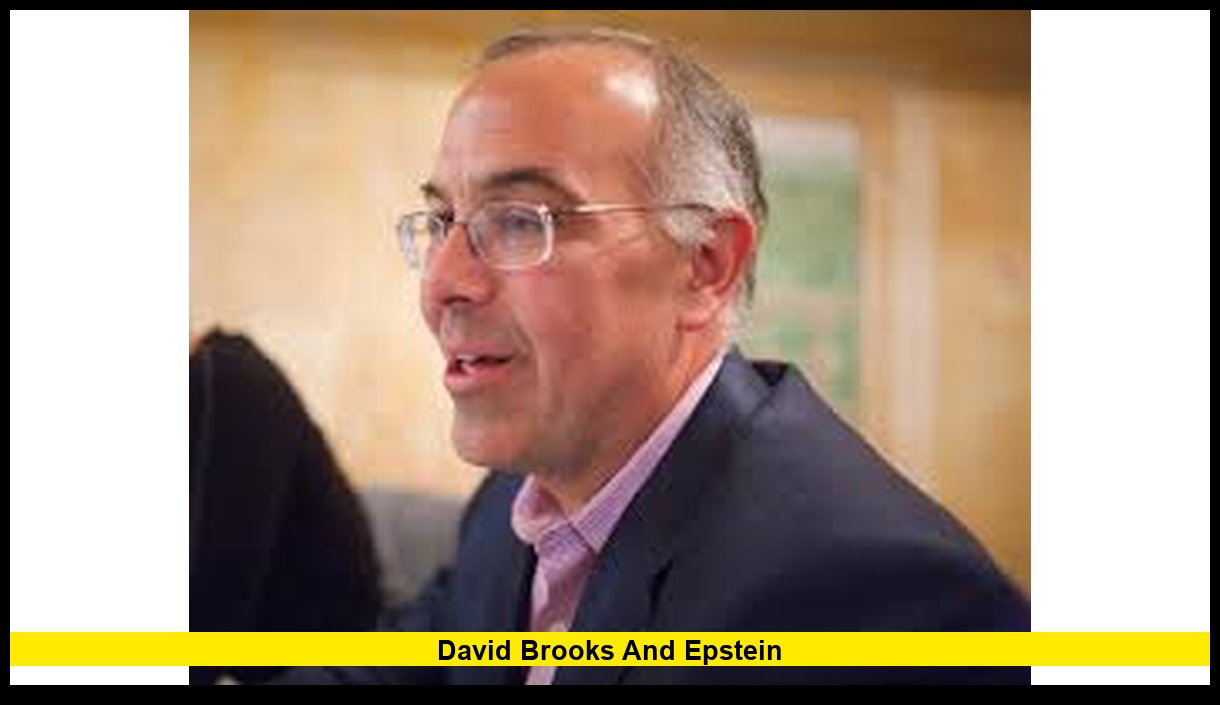
David Brooks and Epstein entered the national spotlight again in December 2025 after newly released photographs from Jeffrey Epstein’s estate showed the prominent New York Times columnist in the same setting as the disgraced financier. The images were made public during a critical phase of federal transparency efforts tied to Epstein-related records, triggering renewed public debate about accountability, context, and the responsibilities of influential public voices.
The renewed attention does not stem from allegations of criminal conduct involving Brooks. Instead, it reflects how Epstein’s long-hidden social network continues to surface years after his death, pulling well-known figures into public scrutiny based on proximity rather than proven wrongdoing. The moment highlights how unresolved questions surrounding Epstein still ripple through American politics, media, and public trust.
Why the David Brooks and Epstein Connection Is Making Headlines Now
The current attention around David Brooks and Epstein is driven by the release of previously unseen photographs taken from Epstein’s private holdings. These images surfaced just days before a federal deadline requiring broader disclosure of Epstein-related materials held by the government.
The photographs include a wide range of public figures from business, media, academia, and politics. Brooks appears in at least one image that places him at a social gathering attended by Epstein more than a decade ago. The images are undated and lack captions, offering no narrative beyond the visual record.
Even without allegations, the release reignited public interest because of Brooks’s stature as a moral and cultural commentator and because of his past writings expressing skepticism about the media’s obsession with Epstein-related stories.
Understanding Who David Brooks Is in American Public Life
David Brooks is a long-serving opinion columnist known for writing about American values, politics, and social character. His work has influenced national conversations for decades, often bridging conservative and liberal audiences.
Brooks has built his reputation on moral reflection, cultural analysis, and critiques of power. That reputation explains why his appearance in Epstein-related material generated immediate attention. Public reaction focused less on the photograph itself and more on how Brooks had previously addressed the Epstein story in his commentary.
His professional role is central to understanding why the images resonated so widely. Brooks is not a private citizen. He is a public intellectual whose opinions shape discourse, making transparency and context especially important when his name appears alongside one of the most notorious criminal figures of the modern era.
The Epstein Photo Release and What It Actually Shows
The photographs released in December 2025 are part of a much larger collection recovered from Epstein’s properties after his arrest and death. Thousands of images remain under review, with only a portion made public so far.
The photos that include Brooks show him in a group setting. They do not depict illegal activity. They do not document private meetings. They do not establish any ongoing relationship.
What they do show is how Epstein cultivated access to influential circles. Epstein was known for embedding himself in elite social environments, often hosting gatherings that included journalists, academics, and policymakers. Presence at such events was not unusual at the time, particularly before Epstein’s criminal history became widely known.
What the Images Do Not Prove
It is essential to separate implication from evidence.
The images involving David Brooks do not demonstrate:
- Criminal conduct
- Financial ties
- Personal friendship
- Repeated contact
- Knowledge of Epstein’s crimes
The absence of context limits interpretation. Photographs alone cannot establish intent, awareness, or complicity. Federal investigators and lawmakers have emphasized this distinction repeatedly as materials are released.
Still, public reaction shows how association alone can carry weight in an era shaped by distrust and unresolved institutional failures.
David Brooks’s Past Commentary on Epstein
Before the photo release, Brooks had already attracted attention for expressing fatigue with the Epstein story. In a widely discussed column published weeks earlier, Brooks argued that endless focus on Epstein risked overshadowing other urgent social and political challenges.
That position drew mixed reactions. Supporters agreed that media cycles can become distorted by sensationalism. Critics argued that Epstein’s case represents systemic failures too serious to dismiss.
When the photos emerged, critics revisited that column. Some questioned whether Brooks should have disclosed his past proximity to Epstein when writing about the topic, even if the connection was minimal.
This tension between perception and disclosure lies at the heart of the current debate.
The Broader Context of the Epstein Files Transparency Push
The release of Epstein-related materials in late 2025 is not accidental. It coincides with federal requirements compelling agencies to release unclassified records connected to Epstein and his associates.
The effort reflects years of public pressure fueled by unanswered questions:
- How did Epstein evade accountability for so long?
- Who enabled his access to power?
- Why were earlier investigations halted or minimized?
The transparency push is meant to restore confidence by shedding light on past failures. The inclusion of recognizable names amplifies attention, even when those names are not accused of crimes.
Why Proximity Still Matters to the Public
Public trust in institutions remains fragile. Epstein’s case exposed deep flaws in law enforcement, prosecutorial discretion, and elite accountability.
Against that backdrop, any appearance of powerful figures near Epstein invites scrutiny. The public is less willing to accept explanations that might have sufficed years ago.
For figures like Brooks, whose careers rest partly on moral authority, even symbolic association becomes significant. This does not equate to guilt. It reflects heightened expectations for transparency.
Media Ethics and the David Brooks and Epstein Debate
The situation has prompted renewed discussion about media ethics and disclosure standards.
Key questions include:
- Should journalists disclose even incidental past contact when writing about a subject?
- Where is the line between relevance and overexposure?
- How should opinion writers handle personal proximity to controversial figures?
There is no legal requirement for such disclosure in this case. Still, public debate suggests evolving expectations for openness in an era shaped by distrust.
Political Reaction and Partisan Framing
The Epstein materials have become a political flashpoint.
Some lawmakers argue that selective releases risk politicizing the issue. Others contend that transparency is long overdue regardless of political fallout.
The inclusion of figures across ideological lines complicates partisan narratives. The Epstein network does not fit neatly into one political camp. That complexity reinforces calls for comprehensive disclosure rather than selective leaks.
How Social Media Amplified the Story
Once the photos became public, social media accelerated the story’s reach. Screenshots circulated rapidly. Commentary often stripped away nuance.
In many cases, posts failed to distinguish between presence and participation. That dynamic underscores the challenge of releasing sensitive material in a digital environment driven by outrage and speed.
Brooks himself became a trending topic not because of new allegations, but because of how the images intersected with his past commentary.
The Long Shadow of Jeffrey Epstein
Epstein’s crimes permanently altered public expectations of elite accountability. His death left many questions unanswered, creating a vacuum filled by speculation and distrust.
Every new release reopens old wounds. For survivors, the focus remains on justice and prevention. For the public, the focus often shifts to names and connections.
This tension explains why figures like Brooks become part of the conversation even without evidence of wrongdoing.
What Accountability Looks Like in This Moment
Accountability does not always mean prosecution. In many cases, it means transparency, explanation, and acknowledgment.
For public figures named or pictured, accountability often takes the form of clarification. For institutions, it involves releasing records and admitting past failures.
The Epstein files process is ongoing. More information may emerge. Each release will test public patience and institutional credibility.
Why This Story Resonates Beyond One Name
The David Brooks and Epstein discussion reflects broader anxieties about power, access, and truth.
It forces uncomfortable questions:
- Who gets proximity to influence?
- How are elite spaces monitored?
- Why did warnings go unheeded?
The answers matter not only for understanding the past, but for preventing future abuse.
Where Things Stand Now
As of today:
- Epstein-related photo releases are ongoing
- Federal agencies face continued pressure to disclose records
- David Brooks remains a public figure under scrutiny due to proximity, not accusation
- Public debate continues over transparency, ethics, and accountability
The story is still unfolding. Its significance lies less in individual names and more in what it reveals about systems that failed to protect the vulnerable.
What Readers Should Keep in Mind
Context matters. Presence does not equal participation. Transparency does not equal accusation.
At the same time, public trust depends on openness. Navigating that balance remains one of the defining challenges of the Epstein legacy.
The conversation around David Brooks and Epstein is ultimately about trust, accountability, and how a society processes unresolved wrongdoing—readers are encouraged to share their perspective and stay engaged as further information emerges.