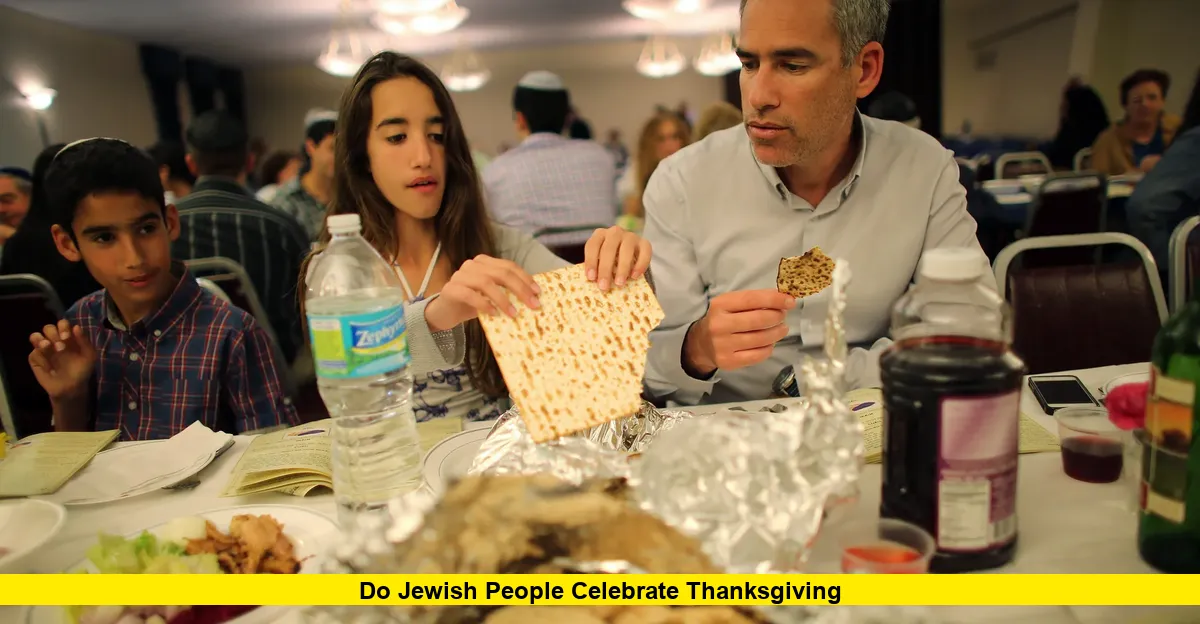
Yes, the vast majority of Jewish people in the United States celebrate Thanksgiving. Because Thanksgiving is a secular federal holiday rather than a religious Christian observance, American Jews across Reform, Conservative, Reconstructionist, and most Orthodox communities embrace the fourth Thursday of November as an annual occasion for family gatherings, festive meals, and expressing gratitude for life in America.
According to Pew Research Center data on how Americans celebrate Thanksgiving, roughly 91% of U.S. adults observe the holiday, and participation spans all major demographic groups. For American Jews, the holiday blends national civic pride with deeply rooted Jewish traditions of daily thanksgiving, hospitality, and community service.
Why Thanksgiving Resonates With Jewish History and Values
In Judaism, gratitude is not limited to a single autumn Thursday—it is woven into daily liturgy. Even the Hebrew word Yehudi (“Jew”) shares a linguistic root with hoda’ah (“thanksgiving” or “gratitude”). Observant Jews begin every morning with Modeh Ani (“I give thanks”), recite blessings before and after eating, and offer prayers of thanks three times daily during the Amidah.
Historically, American Jewish participation in Thanksgiving dates back to the founding of the United States:
- 1789: Following President George Washington’s Thanksgiving Day Proclamation, Rabbi Gershom Mendes Seixas of Congregation Shearith Israel in New York City—the oldest Jewish congregation in North America—delivered a special sermon celebrating the new nation’s religious freedom and civic unity.
- 19th and 20th Centuries: Waves of Jewish immigrants arriving from Eastern Europe and Russia viewed Thanksgiving as a defining American milestone, adopting the holiday to celebrate safety, opportunity, and citizenship in their new home.
- Parallel Harvest Traditions: Scholars have long noted structural parallels between Thanksgiving and Sukkot, the biblical autumn harvest festival described in the Hebrew Bible that early English Puritans studied closely.
How Different Jewish Denominations View Thanksgiving
While there is no single rule governing secular holidays in Judaism, major American Jewish movements share broad consensus—with a few notable nuances among strictly traditional communities:
- Reform, Conservative, and Reconstructionist Judaism: All three movements openly encourage celebrating Thanksgiving. Synagogues frequently host interfaith services, distribute holiday readings, and organize food drives. Reconstructionist Judaism, which emphasizes living in both Jewish and American civilizations, even includes Thanksgiving liturgical reflections.
- Modern Orthodox Judaism: Most Modern Orthodox families celebrate Thanksgiving with a festive meal. In the mid-20th century, Rabbi Joseph B. Soloveitchik—one of the most influential American Modern Orthodox authorities—ruled that eating turkey on Thanksgiving is permissible under Jewish law (halakha) and does not violate prohibitions against imitating non-Jewish religious customs, provided it is treated as a secular civic meal rather than a religious rite.
- Haredi (Ultra-Orthodox) Communities: Some Haredi rabbinic authorities advise against marking the day as a formal holiday, viewing its Pilgrim origins as tied to non-Jewish religious customs. Even in those neighborhoods, however, kosher butcher shops sell thousands of turkeys during November simply because birds are seasonal and families are off from secular work or school.
What a Kosher Jewish Thanksgiving Dinner Looks Like
For Jewish families who keep kosher (kashrut), preparing a traditional American Thanksgiving feast requires a few specific culinary adjustments—primarily because Jewish dietary law strictly prohibits mixing meat and dairy in the same meal.
- Certified Kosher Turkey: Turkey is a kosher fowl, provided it is slaughtered and salted under rabbinic supervision. For food safety, the USDA Food Safety and Inspection Service advises roasting any turkey to a minimum internal temperature of 165°F measured in the breast, thigh, and wing—a rule that applies equally to kosher birds, which are already pre-salted during koshering and therefore require less added salt in brines or rubs.
- Dairy-Free Side Dishes and Desserts: Because turkey is a meat (fleishig) dish, hosts replace butter and milk with pareve (neutral, non-dairy) alternatives such as olive oil, plant-based margarine, vegetable broth, and non-dairy whipped topping for pumpkin or pecan pie.
- Ashkenazi and Sephardic Classics on the Table: Alongside cranberry sauce and sweet potatoes, many Jewish Thanksgiving tables feature matzo ball soup, challah stuffing, noodle or potato kugel, brisket, or tzimmes (sweet glazed carrots and dried fruit).
Regional Trends Across Major U.S. Jewish Communities
Because Thanksgiving is an official federal holiday under U.S. law, schools, courts, and most offices close nationwide, creating distinct local traditions in cities with large Jewish populations:
- New York Metro Area and New Jersey: Kosher supermarkets in Brooklyn, Queens, Teaneck, and the Five Towns experience their busiest week outside of Passover and Rosh Hashanah. Many synagogues hold Thanksgiving morning charity runs or interfaith gatherings before families gather for early afternoon dinners.
- South Florida (Miami, Boca Raton, Fort Lauderdale): Thanksgiving marks the start of the winter “snowbird” season, bringing multigenerational families from the Northeast together for outdoor holiday meals and synagogue-sponsored volunteer packing events.
- Los Angeles and Chicago: Jewish community centers and congregations heavily emphasize tikkun olam (repairing the world), partnering with local food banks and shelters to prepare meals for unhoused neighbors.
What to Know About the Calendar: Thanksgiving, Shabbat, and Hanukkah
Because Thanksgiving always falls on the fourth Thursday of November—such as Thursday, November 26, 2026—it sits just 24 hours before Shabbat (the Jewish Sabbath), which begins at sundown on Friday evening. For observant hosts, this creates a major two-day cooking marathon, though leftovers seamlessly transition into Friday night Shabbat dinner.
Occasionally, the Hebrew lunar calendar aligns Thanksgiving with Hanukkah, creating the viral mashup known as “Thanksgivukkah.” That rare overlap last occurred on November 28, 2013, when the first day of Hanukkah fell on Thanksgiving Day—a calendar alignment that will not happen again for tens of thousands of years under the current Hebrew calendar calculation. In most years, including 2026, Hanukkah falls in December, keeping the two celebrations separate.
Practical Tips for Hosting or Attending a Jewish Thanksgiving
If you are hosting Jewish friends or family—or attending a kosher Thanksgiving meal for the first time—keep these practical guidelines in mind:
- Ask about dietary observance early: Some guests keep strictly kosher at home, others eat vegetarian or dairy-only outside kosher kitchens, and secular Jews may have no dietary restrictions at all.
- Keep packaging intact for kosher items: If bringing wine, dessert, or packaged snacks to a kosher household, leave the items unopened with a visible kosher certification symbol (such as OU, OK, or Star-K).
- Avoid butter in shared side dishes: Using olive oil or vegan butter in mashed potatoes, green beans, and stuffing ensures everyone at a meat-based turkey dinner can eat comfortably.
Do you or your family blend Jewish traditions with Thanksgiving dinner, or do you have a favorite kosher holiday dish—share your thoughts and family traditions in the comments below!