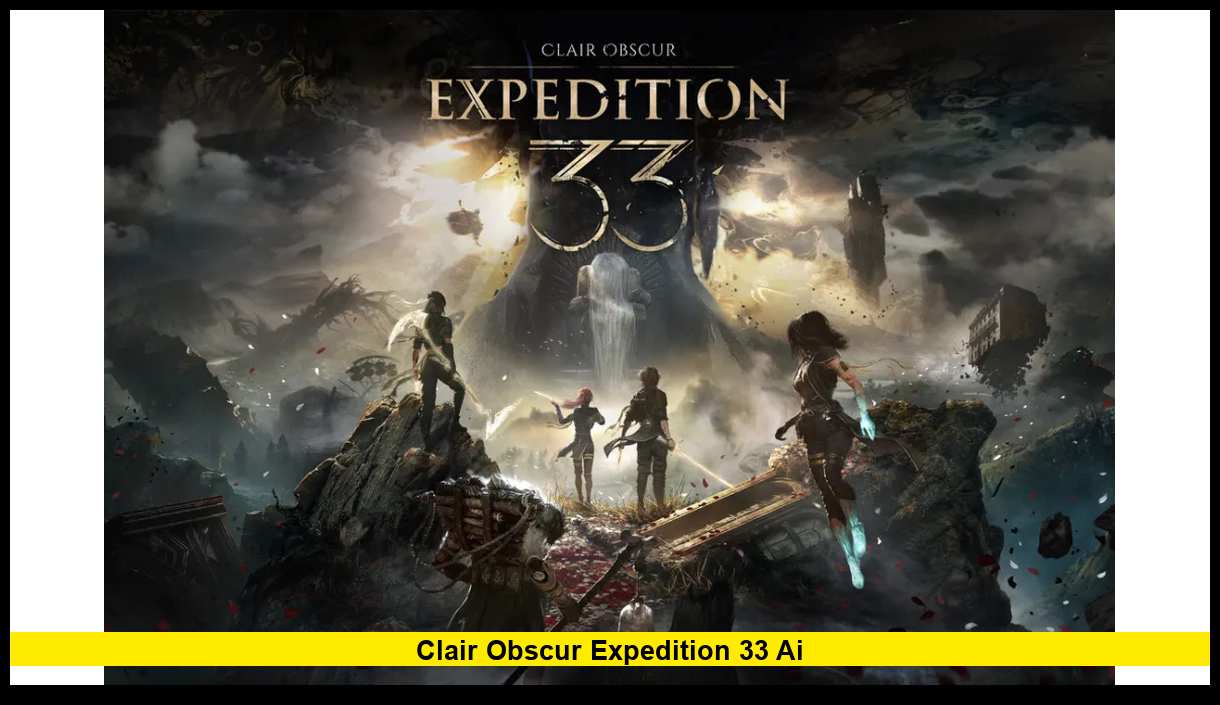
Clair Obscur Expedition 33 AI has emerged as one of the most talked-about topics in gaming after the critically acclaimed role-playing game dominated major awards in 2025 and ignited a wider discussion about artificial intelligence in game development. The title’s success, combined with confirmed but limited AI usage during production, has placed the game at the center of an ongoing industry conversation that continues to evolve as of today.
From record-breaking recognition to passionate community reactions, the story surrounding Clair Obscur: Expedition 33 is no longer just about its narrative or gameplay. It has become a defining example of how modern studios balance creative ambition, new technology, and player expectations in an era increasingly shaped by AI tools.
A Landmark Moment for Clair Obscur Expedition 33
Released in April 2025, Clair Obscur: Expedition 33 quickly distinguished itself as one of the year’s most original and emotionally resonant role-playing games. Developed by Sandfall Interactive and published by Kepler Interactive, the game combined a dark fantasy setting with innovative combat mechanics and a deeply philosophical story about mortality, sacrifice, and time.
The game’s momentum built steadily after launch, driven by strong word-of-mouth, critical acclaim, and high engagement on streaming platforms. By the end of 2025, Clair Obscur: Expedition 33 had sold millions of copies worldwide and secured its place as a commercial and artistic success.
That momentum peaked during the annual awards season, where the title emerged as the most decorated game of the year. Its multiple wins, including the coveted Game of the Year honor, confirmed its status as a modern classic and brought unprecedented attention to the studio behind it.
Understanding the World of Expedition 33
At the heart of the game’s appeal is its distinctive narrative premise. The story takes place in a surreal, painterly world governed by a mysterious entity known as the Paintress. Each year, the Paintress marks a number, and everyone who reaches that age is erased from existence in an event known as the Gommage.
Expedition 33 follows a group of volunteers who embark on a near-impossible mission to stop this cycle. Their journey explores themes of inevitability, resistance, and the value of human life, all while confronting the emotional weight of knowing that time is limited.
The narrative structure relies heavily on character-driven storytelling. Each member of the expedition carries personal motivations, regrets, and fears, which unfold gradually through dialogue, environmental storytelling, and pivotal story moments. This emphasis on emotional depth played a major role in the game’s critical reception.
Gameplay Innovation and Artistic Identity
Beyond its narrative, Clair Obscur: Expedition 33 stood out for its unique approach to combat and visual design. The game blended turn-based mechanics with real-time elements, allowing players to actively dodge, parry, and time attacks during encounters.
This hybrid system rewarded skill and attention without abandoning the strategic depth expected from a role-playing game. Players were encouraged to learn enemy patterns, experiment with character synergies, and adapt their tactics throughout the journey.
Visually, the game adopted a striking aesthetic inspired by classical painting, surrealism, and European art traditions. Environments often felt dreamlike and unsettling, reinforcing the game’s themes and emotional tone. This artistic cohesion became one of the title’s defining traits and a key factor in its long-term impact.
Where AI Entered the Conversation
As Clair Obscur: Expedition 33 gained prominence, attention naturally turned toward how the game was made. During post-release discussions and developer interviews, it was confirmed that generative AI tools were used in a limited capacity during development.
This confirmation did not suggest that AI played a central role in shaping the game’s story, characters, or final art direction. Instead, AI was reportedly used during early development stages for exploratory purposes and placeholder assets that were later replaced by handcrafted work.
The acknowledgment was brief and factual, but it was enough to ignite widespread discussion across social media platforms, forums, and professional circles within the industry.
What Clair Obscur Expedition 33 AI Usage Actually Means
The phrase Clair Obscur Expedition 33 AI has often been misunderstood or overstated in online debates. To clarify, the confirmed AI usage involved support tasks rather than creative decision-making.
Examples of such usage include:
- Early placeholder visuals during prototyping phases
- Concept exploration tools used internally to test ideas
- Temporary assets not intended for final release
There is no evidence that AI-generated content was used in the final narrative, voice acting, character writing, or finished artwork seen by players. The final product remains a human-led creative effort shaped by artists, writers, designers, and developers.
Understanding this distinction is essential when evaluating the broader implications of AI in game development.
Community Reaction: Praise, Concern, and Debate
Player reaction to the AI revelation has been deeply divided. Many fans expressed appreciation for the studio’s transparency and argued that limited AI usage did not diminish the quality or integrity of the final game.
Supporters pointed out that Clair Obscur: Expedition 33 stands as proof that strong artistic vision and emotional storytelling remain at the core of great games, regardless of the tools used behind the scenes.
Others, however, voiced concern about the precedent it might set. Critics worry that even minimal AI use could gradually expand into more central creative roles, potentially affecting job security and artistic authenticity within the industry.
This tension reflects a broader cultural conversation about technology, creativity, and trust—one that extends far beyond a single game.
Industry Perspectives on the AI Question
Within the professional gaming industry, reactions have been more measured but equally significant. Many developers acknowledge that AI tools are becoming increasingly common in early-stage development, especially for smaller studios facing tight budgets and timelines.
From this perspective, AI is seen as a productivity aid rather than a replacement for human creativity. When used responsibly, it can help teams prototype faster, test ideas more efficiently, and focus their energy on high-impact creative decisions.
At the same time, industry leaders emphasize the importance of clear boundaries. There is growing consensus that AI should not replace core creative roles or obscure authorship, especially in narrative-driven games where emotional authenticity is paramount.
Why Clair Obscur Became a Flashpoint
The reason Clair Obscur: Expedition 33 became such a prominent case study is not simply because it used AI. It is because the game succeeded so visibly while doing so.
Winning Game of the Year elevated the title into a symbol. For supporters, it represents a future where technology and artistry coexist. For skeptics, it raises questions about where the line should be drawn.
Few games manage to influence both artistic discourse and industry policy discussions at the same time. Clair Obscur: Expedition 33 has done exactly that.
The Role of Transparency Moving Forward
One of the most important lessons from the Clair Obscur Expedition 33 AI discussion is the value of transparency. Players today are more informed and engaged than ever before. They want to understand not just what they are playing, but how it was created.
Studios that communicate openly about their processes tend to build stronger trust with their audience. In contrast, silence or ambiguity can fuel speculation and backlash, even when AI usage is minimal.
As AI tools continue to evolve, transparency may become a defining factor in how studios maintain credibility and community support.
Impact on Future Game Development
The ripple effects of this debate are already being felt. Developers across the industry are reassessing how they use AI and how they communicate that usage to players.
Some potential long-term impacts include:
- Clearer internal guidelines for AI use
- More detailed disclosure practices
- Increased emphasis on human-led creative roles
- Ongoing discussions about ethical standards
While no universal rules have emerged yet, Clair Obscur: Expedition 33 has undeniably accelerated these conversations.
Why the Game’s Legacy Extends Beyond Awards
Awards and sales figures tell only part of the story. The lasting legacy of Clair Obscur: Expedition 33 may lie in how it reshaped conversations about creativity, technology, and responsibility in modern game development.
The game demonstrated that artistic ambition and emotional storytelling still resonate deeply with players. At the same time, it highlighted the reality that new tools are becoming part of the creative process, whether audiences are comfortable with them or not.
Balancing these truths will define the next chapter of the industry.
Key Facts at a Glance
- Released in April 2025 for major platforms
- Won multiple major awards, including Game of the Year
- Sold millions of copies worldwide
- Confirmed limited AI usage during early development
- Sparked ongoing debate about AI in creative industries
These facts form the foundation of why Clair Obscur: Expedition 33 continues to dominate discussions months after its release.
What Comes Next for the Conversation
As of today, the discussion surrounding Clair Obscur Expedition 33 AI shows no signs of fading. New games, tools, and policies will continue to shape opinions, but this title will remain a reference point for years to come.
For players, it offers an opportunity to reflect on what truly matters in a game: the experience, the emotions, and the connection formed through play.
For developers, it serves as both inspiration and caution—a reminder that innovation must be matched with responsibility and clarity.
How do you feel about the role of AI in award-winning games like Clair Obscur: Expedition 33? Share your thoughts and stay updated as this conversation continues to evolve.