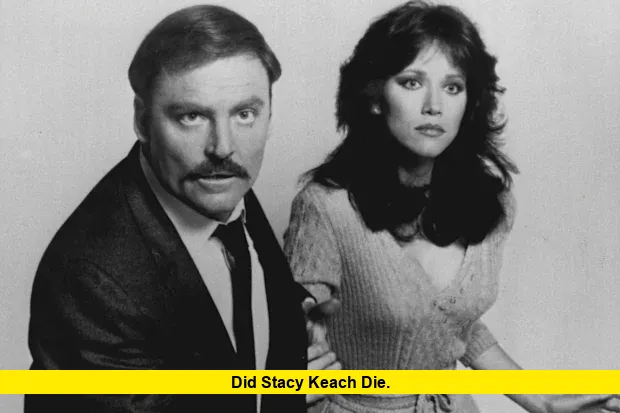
Did Stacy Keach die? Yes. The veteran American actor Stacy Keach has died at the age of 85, according to breaking news reports published today. Best known for portraying private investigator Mike Hammer and prison warden Henry Pope in Prison Break, Keach built a remarkable career across film, television, and theater that spanned several decades. His death marks the loss of a versatile performer whose distinctive voice, commanding screen presence, and acclaimed stage work made him a familiar figure to generations of American audiences.
Keach’s career extended far beyond his best-known television characters. He appeared in the acclaimed film American History X, played recurring roles in popular crime dramas, and earned recognition for his portrayal of writer Ernest Hemingway. His work demonstrated an unusual ability to move between gritty crime stories, dramatic films, comedy, Shakespearean theater, and documentary narration.
For readers searching for did Stacy Keach die, the latest reports confirm his passing at 85. His extensive body of work, including Mike Hammer, Prison Break, and Blue Bloods, remains an important part of his entertainment legacy.
Did Stacy Keach Die? What We Know About His Death
Stacy Keach died at his home in Poland, according to a report published by The Associated Press on November 11, 2026. He was 85 years old.
Reports attributed the announcement to his wife, Malgosia Keach, who said he died following a prolonged struggle with a serious heart condition and heart failure. The news brought renewed attention to an acting career that covered approximately seven decades and included celebrated performances on Broadway, in Hollywood films, and on American television.
Keach was widely respected for his ability to portray complicated, authoritative characters. Whether he was playing a determined detective, a prison administrator, or a morally troubling figure in a dramatic film, he brought a recognizable intensity to his performances.
His death also prompted renewed interest in the many productions that introduced him to different generations of viewers. Some remember him primarily as Mike Hammer, while others associate him with Prison Break, American History X, or his appearances in Blue Bloods.
The significance of his career lies in that range. Keach was not defined by one role, one genre, or one period of television history. He developed a reputation as a serious stage actor while maintaining a long and productive career in mainstream entertainment.
Who Was Stacy Keach? A Look at His Early Life
Stacy Keach, born Walter Stacy Keach Jr. on June 2, 1941, in Savannah, Georgia, grew up in a family connected to the performing arts. His father, Stacy Keach Sr., worked as an actor and theater director, helping expose him to the world of performance at an early age. His younger brother, James Keach, also pursued a career in entertainment.
Keach developed an interest in acting that extended beyond the screen. He studied at the University of California, Berkeley, before continuing his education at the Yale School of Drama. He also studied at the London Academy of Music and Dramatic Art.
His training gave him a strong foundation in classical theater, particularly Shakespeare. Rather than treating theater as a stepping stone to film and television, he continued to return to the stage throughout his career.
That commitment helped distinguish him from many performers who became known primarily through television. Keach was comfortable with demanding dramatic material and developed the voice, timing, and physical presence needed to perform in productions ranging from modern American drama to classical tragedy.
His early stage experience also helped him approach screen roles with a sense of discipline and character development. Those qualities became especially apparent in his performances as Mike Hammer, Henry Pope, and other characters who carried significant authority or emotional complexity.
Stacy Keach Movies and TV Shows: His Most Memorable Performances
The range of Stacy Keach movies and TV shows reflects his ability to work across genres without becoming confined to a single type of character. He earned recognition in crime dramas, independent films, studio productions, sitcoms, television miniseries, and documentaries.
His career began gaining serious attention in the early 1970s, when he appeared in films that demanded more than conventional leading-man charm. Over time, he became a dependable presence in productions that needed an actor capable of conveying intelligence, experience, authority, and sometimes menace.
Some of his most recognizable screen credits include:
- ** Fat City (1972):** Keach played Tully, a struggling boxer in director John Huston’s drama about ambition, disappointment, and the harsh realities of life in professional boxing.
- ** The Long Riders (1980):** He portrayed Frank James in the Western film about the James-Younger gang.
- ** The Ninth Configuration (1980):** This psychological drama became another notable entry in his film career.
- ** American History X (1998):** Keach played Cameron Alexander, a white supremacist who influences younger characters in the film’s exploration of racism and radicalization.
- ** Escape from L.A. (1996):** He appeared in John Carpenter’s dystopian action film.
- ** The Bourne Legacy (2012):** He played retired CIA operative Mark Turso in the espionage thriller.
- ** Nebraska (2013):** His credits included this acclaimed black-and-white drama directed by Alexander Payne.
- ** Titus (2000–2002):** Keach played Ken Titus, the difficult father of the title character in the Fox comedy.
- ** The Blacklist (2019–2023):** He portrayed Robert Vesco in the crime thriller.
- ** Blue Bloods (2016–2024):** He made recurring appearances as Archbishop Kevin Kearns.
These performances demonstrate why his career attracted interest from audiences with very different entertainment preferences. He could carry a dramatic film, support an ensemble cast, or make a memorable impression in a relatively brief television appearance.
For an overview of his screen credits, readers can consult his TV Guide filmography.
Stacy Keach and Prison Break: The Story Behind Warden Henry Pope
One of the most frequently searched topics following news of Keach’s death is his role in Prison Break, the Fox drama that became a major television hit during the 2000s.
Keach played Henry Pope, the warden of Fox River State Penitentiary, where much of the show’s early story takes place. His character was an experienced administrator responsible for maintaining order in an institution filled with prisoners, political pressures, and complicated personal relationships.
The series follows Michael Scofield, played by Wentworth Miller, who deliberately enters prison to help his brother Lincoln Burrows, played by Dominic Purcell, escape a death sentence.
Pope initially represents the authority of the prison system. However, his relationship with Michael develops beyond a simple conflict between an inmate and a warden. Michael works on a personal project for Pope, creating a connection that gives the character additional emotional depth.
Keach’s performance helped make Pope more than a conventional prison official. The warden was a man balancing professional responsibilities with his personal life, and his growing trust in Michael became an important element of the early story.
Why Henry Pope Remains a Memorable Character
Although Keach was not the central protagonist of Prison Break, his character contributed to the show’s atmosphere and tension.
The prison setting required believable authority figures who could make the institution feel like a functioning environment rather than simply a backdrop for the escape plot. Keach’s experience and controlled performance helped establish that credibility.
His portrayal also introduced moral complications. Pope was not presented as an entirely corrupt administrator or an unquestioningly heroic figure. He had responsibilities, personal vulnerabilities, and limits to what he could understand about the people under his supervision.
That complexity helped make his interactions with Michael more engaging.
For many viewers who discovered Keach through television rather than film or theater, Prison Break remains one of the performances most closely associated with his name.
Stacy Keach as Mike Hammer: The Role That Defined His Television Career
While Prison Break introduced Keach to many younger viewers, Mike Hammer was arguably his signature television role.
The character originated in the crime novels of Mickey Spillane. Hammer is a hard-edged private investigator who operates in a world of dangerous criminals, complicated mysteries, and morally uncertain situations.
Keach brought the character to television in the early 1980s, starring in Mickey Spillane’s Mike Hammer and later returning in The New Mike Hammer. He also played the detective in the later series Mike Hammer, Private Eye.
His interpretation emphasized Hammer’s toughness, confidence, and willingness to confront danger directly. The character’s approach contrasted with more restrained investigators, creating a style that suited the crime dramas of the era.
How Keach Made Mike Hammer His Own
Playing a familiar literary detective presents a challenge: audiences often arrive with established expectations about the character.
Keach’s theatrical training helped him create a recognizable interpretation without relying entirely on the character’s reputation. He used his deep voice, physical presence, and deliberate delivery to establish a detective who appeared experienced and difficult to intimidate.
The role also demonstrated his ability to sustain a television series. A leading character in a crime drama must remain compelling across multiple cases while giving audiences a reason to return each week.
Keach’s portrayal became closely associated with the television version of Hammer, and the character remains a major part of his legacy.
For viewers exploring his career after his death, the Mike Hammer productions provide a useful starting point for understanding why he became a familiar face in American television.
Stacy Keach in Blue Bloods: His Role as Archbishop Kevin Kearns
Another important entry in the Stacy Keach television catalog is Blue Bloods, the CBS police drama centered on the Reagan family, whose members work in different areas of New York City’s law enforcement system.
Keach played Archbishop Kevin Kearns, a recurring character who brought a religious and ethical perspective to the series.
The character’s appearances added another dimension to the show’s exploration of public service, family relationships, personal responsibility, and moral judgment. Although Blue Bloods primarily focuses on policing and the justice system, its stories frequently extend into questions about faith, duty, and the consequences of difficult decisions.
Keach’s background in serious drama made him a natural fit for a character who often needed to convey authority through conversation rather than action.
His appearances also demonstrated his continued ability to contribute to established television franchises late in his career.
Blue Bloods concluded its original run in December 2024. Keach’s association with the series therefore belongs to the show’s completed television history rather than an ongoing role.
Stacy Keach and American History X: A Powerful Film Performance
Stacy Keach’s appearance in American History X is another significant part of his film legacy.
Released in 1998, the film stars Edward Norton as Derek Vinyard, a young man whose involvement with white supremacist ideology leads to violence, imprisonment, and an eventual struggle to change his life.
Keach played Cameron Alexander, an influential white supremacist who helps shape Derek’s political and personal outlook.
The film examines racism, extremist recruitment, family influence, violence, and the possibility of rejecting destructive beliefs. Cameron is important to that narrative because he represents the process through which prejudice can be organized, promoted, and passed on to younger people.
Keach did not need to dominate every scene to make the character consequential. His performance gave Cameron a calculated, persuasive quality that helped explain how dangerous ideas can gain influence.
Why American History X Still Matters
The film remains widely discussed because it addresses the consequences of racial hatred without presenting radicalization as an isolated personal failing.
It explores how family circumstances, social environments, group loyalty, and manipulation can reinforce extremist beliefs. It also examines the difficulties involved in breaking away from those influences.
Keach’s character serves as an important part of that examination.
His performance in American History X illustrates a recurring strength throughout his career: he could play authoritative figures who were not necessarily admirable, using restraint and precision to make their influence believable.
For audiences familiar with Keach primarily through Prison Break or Mike Hammer, the film offers a very different view of his acting range.
Other Major Highlights From Stacy Keach’s Career
Keach’s filmography included much more than his best-known crime and television roles.
Fat City and His Early Film Recognition
In Fat City, Keach played a boxer confronting the decline of his athletic prospects and the disappointment of an uncertain future.
The performance required him to portray a man whose ambitions had not disappeared even as his opportunities narrowed. The film’s naturalistic style suited Keach’s ability to communicate frustration and vulnerability without excessive dramatization.
The role helped establish his reputation as a serious dramatic actor.
Hemingway and His Award-Winning Television Work
One of Keach’s most celebrated television performances came in the 1988 miniseries Hemingway, in which he portrayed American writer Ernest Hemingway.
The role required him to capture the personality and contradictions of a major literary figure whose public image often overshadowed his private struggles.
Keach won a Golden Globe for his portrayal and received an Emmy nomination. The performance remains an important example of his ability to take on biographical characters rather than relying exclusively on fictional roles.
Titus and His Comic Timing
In the Fox sitcom Titus, Keach played Ken Titus, the father of comedian Christopher Titus’s character.
The series mixed dark humor with difficult family issues, giving Keach opportunities to display a different kind of performance. His character was frequently abrasive, and his comic delivery helped create the show’s distinctive tone.
The role showed that Keach’s dramatic intensity could also serve comedy.
The Bourne Legacy and Modern Action Films
Keach appeared in The Bourne Legacy in 2012, joining an espionage franchise known for its political intrigue, surveillance, and covert operations.
His role as Mark Turso suited the film’s world of experienced intelligence personnel and institutional secrecy.
The appearance demonstrated that he continued to find work in major film productions well into his seventies.
What Was Stacy Keach’s Net Worth?
Searches for Stacy Keach net worth have increased as audiences revisit his career and personal history.
However, a definitive, independently verified figure for his net worth is not established in the publicly available information reviewed for this article. Online celebrity wealth estimates should therefore be treated cautiously rather than presented as confirmed financial facts.
Keach worked across film, television, theater, and voice-over narration for decades. Those activities provided multiple potential sources of professional income, but a long list of credits does not establish the value of someone’s assets.
A reliable net-worth calculation would require information about earnings, investments, property, taxes, expenses, and other financial obligations. Those details are not comprehensively available in the public record.
How Did Stacy Keach Earn His Living?
Keach’s career included several distinct professional areas:
- Film acting: Roles in theatrical releases, including dramas, Westerns, and action films.
- Television acting: Leading and recurring roles in scripted series and miniseries.
- Theater: Performances in classical and contemporary stage productions.
- Voice-over work: Narration for documentary programs, including CNBC’s American Greed.
- Other entertainment work: Professional activities associated with producing, directing, and the broader performing arts.
His narration work was particularly recognizable to audiences who followed financial crime documentaries. His voice became an important part of American Greed, helping establish the series’ investigative tone.
The safest conclusion is that Keach had an extensive professional career, but his exact net worth should not be treated as confirmed without reliable financial documentation.
Awards, Theater, and the Legacy Beyond Hollywood
Although Keach achieved considerable success on screen, theater remained a central part of his professional identity.
He performed in Shakespearean productions including Hamlet, Macbeth, Richard III, and King Lear. His stage work demonstrated the classical training that shaped his approach to acting throughout his career.
He received multiple theater honors, including Drama Desk Awards and Helen Hayes Awards. He was also nominated for a Tony Award for his performance in Arthur Kopit’s play Indians.
In 2019, he received a star on the Hollywood Walk of Fame, recognizing his contribution to the entertainment industry.
These achievements matter because they provide a broader picture of his career. Keach was not simply a television actor who occasionally appeared in films. He was a performer whose work moved between commercial entertainment and demanding theatrical productions.
His accomplishments also reflected the importance of longevity in acting. Maintaining a career across several decades requires performers to adapt to changing production styles, audience expectations, and opportunities.
Keach continued to work across different formats, allowing audiences from multiple generations to become familiar with his performances.
Stacy Keach’s Personal Life and Family
Keach’s personal life included a long connection to the performing arts and a family that also worked in entertainment.
His brother, James Keach, became known as an actor, director, and producer. Their father, Stacy Keach Sr., worked in theater, giving the family a professional connection to acting that extended across generations.
Keach was married to Malgosia Keach, who was identified in reports of his death as his wife. The couple had children, including Shannon and Karolina, and he also leaves grandchildren, according to published reports.
Keach’s public identity was primarily associated with his work rather than an extensive discussion of his private affairs. His professional accomplishments, theater performances, and screen roles formed the main foundation of his reputation.
His family connections also illustrate how his career developed within a broader artistic environment, although his achievements were distinctly his own.
What Happened to Stacy Keach Before His Death?
Keach’s life and career included difficult periods as well as professional success.
In 1984, he was arrested at London’s Heathrow Airport in connection with cocaine smuggling and subsequently served a prison sentence in Britain. The incident became a serious interruption in his career.
He later spoke publicly about addiction and recovery. His return to acting demonstrated that his professional life continued after a highly public setback.
That episode should be understood as one part of a much longer biography rather than as a complete definition of the actor. His subsequent work included prominent television roles, films, theater performances, and narration.
In the years that followed, Keach appeared in productions such as Prison Break, The Bourne Legacy, Blue Bloods, and The Blacklist. His continued presence on screen allowed him to remain recognizable to audiences who might not have watched his earlier Mike Hammer series.
His death at 85 now places that long career in historical perspective. The range of his performances, along with his ability to return to professional work after setbacks, forms a substantial part of his story.
Where Can Fans Watch Stacy Keach’s Movies and TV Shows?
Fans wishing to revisit Keach’s work can search major streaming services, digital rental stores, television archives, and physical-media collections.
Availability varies by title, subscription service, and region, so a film or series may not be included in every streaming catalog at the same time.
A practical starting point is to search for the specific production rather than assuming that every title in his filmography is available on one platform.
Viewers interested in different aspects of his career can begin with these selections:
- For crime television: Mickey Spillane’s Mike Hammer and The New Mike Hammer.
- For prison drama: Prison Break.
- For a serious exploration of racism: American History X.
- For an early dramatic performance: Fat City.
- For a biographical role: Hemingway.
- For a modern espionage thriller: The Bourne Legacy.
- For ensemble police drama: Blue Bloods.
- For dark comedy: Titus.
The official Stacy Keach website also provides biographical information and career details for those interested in learning more about his work.
Final Thoughts
Stacy Keach’s death at 85 marks the end of a long career that connected classical theater, Hollywood filmmaking, and American television. From Mike Hammer and Henry Pope to Cameron Alexander and Ernest Hemingway, his performances showed how a skilled actor could bring authority, complexity, and individuality to very different characters. His work continues to offer audiences a way to appreciate his range, his dedication to acting, and his lasting contribution to entertainment.
Which Stacy Keach performance do you remember most—Mike Hammer, Prison Break, American History X, or one of his many other roles? Share your thoughts and stay tuned for further updates on his life and legacy.