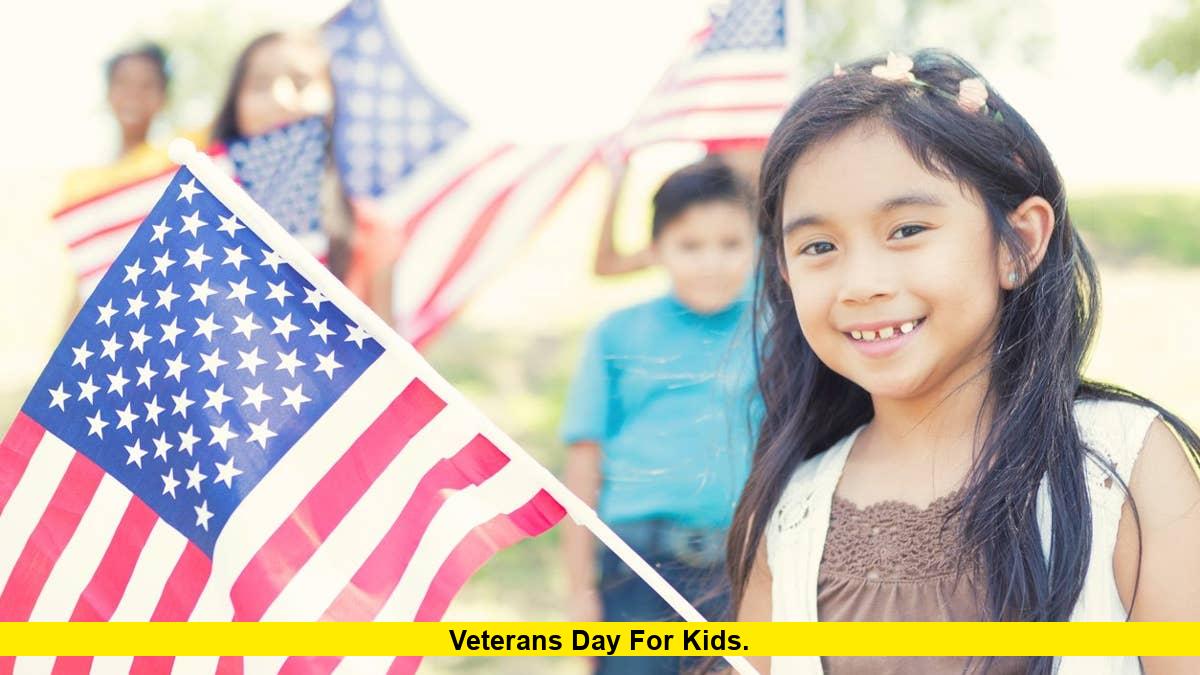
Veterans Day for kids is an opportunity to help children understand the meaning of military service, recognize the sacrifices made by American veterans, and learn why the United States honors those who have served in its armed forces. As Veterans Day 2026 approaches on November 11, families, teachers, and schools can use age-appropriate lessons, classroom activities, and community events to explain this important national observance.
Children often recognize Veterans Day through school assemblies, American flags, patriotic artwork, and special classroom discussions. However, the holiday represents much more than a day off from school or a patriotic celebration. It provides an opportunity to teach children about courage, service, responsibility, freedom, and gratitude.
The most important lesson is that Veterans Day honors all living and deceased American military veterans who served in the U.S. Armed Forces. It is a day to recognize their service and thank them for their contributions to the country.
Understanding Veterans Day at a young age can help children develop respect for military families and appreciate the people who have served the nation.
When Is Veterans Day 2026?
Veterans Day falls on Wednesday, November 11, 2026. The holiday takes place on November 11 every year, regardless of the day of the week.
For children, the date offers a simple way to connect American history with a national tradition. Parents and teachers can explain that November 11 marks the anniversary of the armistice that brought an end to the fighting in World War I in 1918.
The U.S. Department of Veterans Affairs has released its 2026 Veterans Day Teachers Resource Guide to help educators, youth leaders, and community organizations teach children about the holiday. The guide includes age-appropriate educational material about the history of Veterans Day, military service, citizenship, and the importance of honoring veterans.
The 2026 observance also coincides with the nation’s 250th anniversary year, creating an opportunity to discuss how military service and civic responsibility connect with American history.
Families should check local school announcements for information about assemblies, classroom activities, and community observances. School schedules can vary by district, even when the holiday falls on a Wednesday.
What Does Veterans Day Mean for Kids?
Veterans Day recognizes people who served in the United States Armed Forces. These include veterans of the Army, Navy, Marine Corps, Air Force, Space Force, and Coast Guard.
A veteran is someone who served in the military. Children should understand that veterans have different experiences. Some served during wars, while others served during peacetime.
An easy way to explain the holiday is to tell children that Americans set aside a special day to recognize people who wore the nation’s military uniform and served their country.
Parents and teachers can introduce several important lessons:
- Gratitude: Thank veterans for their service and contributions.
- Respect: Treat veterans and military families with kindness.
- Service: Understand that people contribute to their communities in different ways.
- History: Learn how military service has shaped the United States.
- Peace: Recognize the importance of resolving disagreements and protecting human life.
Children do not need to understand every detail of military history to appreciate Veterans Day. Simple explanations, meaningful conversations, and hands-on activities can help them understand why the holiday matters.
The History of Veterans Day Explained for Children
Veterans Day began as Armistice Day, a commemoration connected to World War I.
On November 11, 1918, an armistice between the Allied nations and Germany took effect. An armistice is an agreement to stop fighting. The agreement took effect at the 11th hour of the 11th day of the 11th month.
President Woodrow Wilson proclaimed November 11, 1919, as the first national commemoration of Armistice Day in the United States.
Congress recognized the observance in 1926, and legislation established Armistice Day as a federal holiday in 1938.
After World War II and the Korean War, Americans increasingly wanted to honor veterans who had served in conflicts beyond World War I. President Dwight D. Eisenhower signed legislation on June 1, 1954, changing the holiday’s name to Veterans Day.
The new name recognized American veterans of all wars and military service more broadly.
Children can remember the main historical milestones through this simple timeline:
- 1918: The World War I armistice takes effect on November 11.
- 1919: The United States observes the first Armistice Day.
- 1926: Congress officially recognizes the annual observance.
- 1938: Armistice Day becomes a federal holiday.
- 1954: The holiday receives the name Veterans Day.
- 2026: Americans observe Veterans Day on Wednesday, November 11.
This timeline gives students a useful starting point for understanding how the holiday developed and why Americans continue to recognize it.
Veterans Day vs. Memorial Day: What Kids Should Know
Children sometimes confuse Veterans Day with Memorial Day because both holidays recognize American military service. However, the two observances have different primary purposes.
Veterans Day honors all American military veterans, living and deceased, with particular emphasis on thanking those who served.
Memorial Day, observed on the last Monday in May, honors military personnel who died while serving their country.
Teachers can use a simple comparison to make the distinction clear.
| Veterans Day | Memorial Day |
|---|---|
| Observed on November 11 | Observed on the last Monday in May |
| Honors all American military veterans | Remembers military personnel who died in service |
| Emphasizes gratitude for military service | Emphasizes remembrance and sacrifice |
| Often includes veterans’ ceremonies and parades | Often includes memorial ceremonies and tributes |
An effective classroom explanation is that Veterans Day thanks those who served, while Memorial Day especially remembers those who died in military service.
Understanding this difference helps children recognize the meaning behind each holiday instead of treating them as interchangeable occasions.
Veterans Day Activities for Kids at School
Classroom activities help children connect historical facts with meaningful actions. Teachers can choose projects based on students’ ages, reading abilities, and classroom schedules.
The most effective activities combine learning with respect for veterans and their experiences.
1. Create Thank-You Cards for Veterans
Children can make handmade cards expressing appreciation for veterans. They might draw American flags, write a short message, or include a picture representing service and gratitude.
For younger students, teachers can provide sentence starters such as “Thank you for serving our country” or “I appreciate your service.”
Older students can write more personal messages about the importance of service, responsibility, and community.
If the class plans to send the cards to veterans, teachers should arrange delivery through a verified local veterans organization, veterans’ facility, or community program.
2. Make a Veterans Day Poster
Poster-making allows children to express what they have learned visually. Students can include the words “Thank You, Veterans,” American flag designs, and short statements explaining the holiday.
Teachers can ask students to include one historical fact, such as the reason Veterans Day falls on November 11.
Displaying the finished posters in a classroom or school hallway can encourage other students to learn about the observance.
3. Hold a Classroom Appreciation Ceremony
Schools can organize a short ceremony featuring student readings, patriotic songs, and a moment of appreciation for veterans.
If local veterans are invited, organizers should make participation voluntary and give guests an opportunity to share only what they feel comfortable discussing.
Children can prepare respectful questions about military life, service, teamwork, and the transition to civilian life.
4. Read Age-Appropriate Books About Veterans
Reading activities help children explore the holiday through stories and historical accounts.
Teachers can select picture books for younger students and nonfiction accounts for older readers. A discussion afterward can focus on the meaning of service, the variety of military experiences, and why communities recognize veterans.
Educators should distinguish between historical facts and fictional stories so students understand what is real and what is imaginative.
5. Build a Veterans Day Timeline
Students can create a classroom timeline using the major dates in the holiday’s history.
Each child or group can research one milestone and explain it in a few sentences. This activity supports reading, writing, historical thinking, and teamwork.
By the end of the lesson, students can explain how Armistice Day became Veterans Day.
Veterans Day Activities for Kids at Home
Parents do not need elaborate supplies or expensive outings to teach children about Veterans Day. Everyday activities can help make the holiday memorable.
Write a Thank-You Message
Children can write a short letter or draw a picture for a veteran they know. Parents can help them express appreciation in their own words rather than requiring a formal speech.
If a family member served in the military, the holiday can provide an opportunity to listen to their experiences, provided they feel comfortable sharing them.
Learn About the U.S. Armed Forces
Parents can explain the different branches of the U.S. military and discuss how service members work in different roles.
Children can learn that military service involves a wide range of responsibilities, including aviation, medical care, communications, engineering, logistics, and national defense.
The discussion should focus on understanding service rather than presenting war as an adventure or glorifying violence.
Attend a Local Veterans Day Event
Families can look for community ceremonies, parades, school programs, or public gatherings planned for November 11.
Some events may take place on the weekend before or after the holiday to make attendance easier. Families should verify event schedules, locations, and accessibility arrangements before traveling.
Attending an event gives children an opportunity to see how communities recognize veterans.
Practice Everyday Acts of Appreciation
Children can learn that gratitude extends beyond a single holiday. They can listen respectfully when veterans share their experiences, help with age-appropriate community projects, and treat military families with consideration.
Parents can explain that a sincere thank-you is meaningful, but veterans do not owe anyone a personal account of their service.
How Schools Can Teach Veterans Day by Grade Level
Lessons work best when teachers adjust their content to students’ ages and developmental needs.
Preschool and Kindergarten
Young children can learn the basic meaning of Veterans Day through pictures, stories, coloring pages, and simple thank-you messages.
Teachers can explain that veterans are people who served in the military and that the country sets aside a day to recognize them.
Lessons at this level should use clear language and avoid frightening descriptions of war.
Elementary School Students
Students in elementary grades can learn about the holiday’s history, the branches of the military, and the difference between Veterans Day and Memorial Day.
Teachers can introduce the 1918 armistice and explain why November 11 remains significant.
Writing assignments, classroom timelines, short presentations, and interviews with willing veterans can deepen understanding.
Middle School Students
Middle school students can explore how the holiday changed from Armistice Day to Veterans Day.
They can investigate the experiences of veterans from different periods of American history and examine the relationship between military service, citizenship, and community support.
Students can also compare historical accounts while considering how individual veterans’ experiences differ.
High School Students
Older students can study military history in greater depth, examine oral histories, and research the experiences of veterans returning to civilian life.
Projects might include presentations on veterans’ contributions, local military history, or the role of veterans’ organizations in communities.
Teachers should encourage careful research, respectful discussion, and recognition of the diversity of veterans’ experiences.
The 2026 Veterans Day Teachers Resource Guide
One of the most relevant educational developments for this year’s observance is the release of the 2026 Veterans Day Teachers Resource Guide by the U.S. Department of Veterans Affairs and the Veterans Day National Committee.
Announced on November 2, 2026, the guide supports educators, youth leaders, and community organizations preparing lessons and activities for Veterans Day.
Its materials cover the history and significance of the holiday, with classroom-ready lessons designed to help students understand military service, civic responsibility, and national history.
The guide also connects this year’s observance with the 250th anniversary of the United States.
Teachers can use the resource to develop age-appropriate lessons rather than relying entirely on generic patriotic crafts. Families and youth organizations can also draw on the same educational themes when planning discussions and community activities.
The VA’s annual Veterans Day resources include educational materials and commemorative posters. These can help schools build lessons around verified historical information and the central purpose of the holiday.
Why Teaching Kids About Veterans Day Matters
Learning about Veterans Day helps children connect national history with the people behind it.
Children can develop an understanding of service, sacrifice, teamwork, and responsibility while learning that veterans come from different backgrounds and have different experiences.
These lessons also create opportunities to discuss military families. Some children have parents, grandparents, or other relatives who served, while others may have little direct contact with veterans.
An inclusive classroom recognizes both experiences. No child should feel required to discuss a family member’s military service, and no veteran should feel pressured to share personal memories.
Teachers and parents can also explain that honoring veterans includes listening respectfully, recognizing their contributions, and understanding that returning to civilian life can bring different challenges for different people.
Above all, children should learn that gratitude does not require elaborate ceremonies. A thoughtful message, a respectful conversation, or participation in a community event can all help express appreciation.
How Families Can Make Veterans Day 2026 Meaningful
With Veterans Day falling on Wednesday, November 11, families can plan a small activity that fits their schedules.
A simple plan might include reading about the holiday, creating a thank-you card, and attending a local observance if one is available. Families can also discuss the difference between Veterans Day and Memorial Day to reinforce what children have learned.
Parents should verify local event information because communities organize their own activities and schedules. Schools may also hold assemblies or educational programs before or after the official holiday.
The goal is not to complete as many activities as possible. It is to help children understand why the country recognizes veterans and how they can show appreciation in a thoughtful, age-appropriate way.
Veterans Day for Kids: A Lesson in Gratitude and Service
Veterans Day offers families, schools, and communities a meaningful opportunity to teach children about American history and the people who have served in the U.S. Armed Forces. Through classroom projects, reading activities, conversations, and community events, children can learn why November 11 matters and how gratitude can be expressed with sincerity and respect.
As Veterans Day 2026 approaches, a simple lesson or thoughtful act of appreciation can help children understand the holiday’s purpose and carry its message into everyday life.
Share your favorite Veterans Day activity for kids in the comments, and stay updated for more educational ideas that help children understand America’s important national observances.