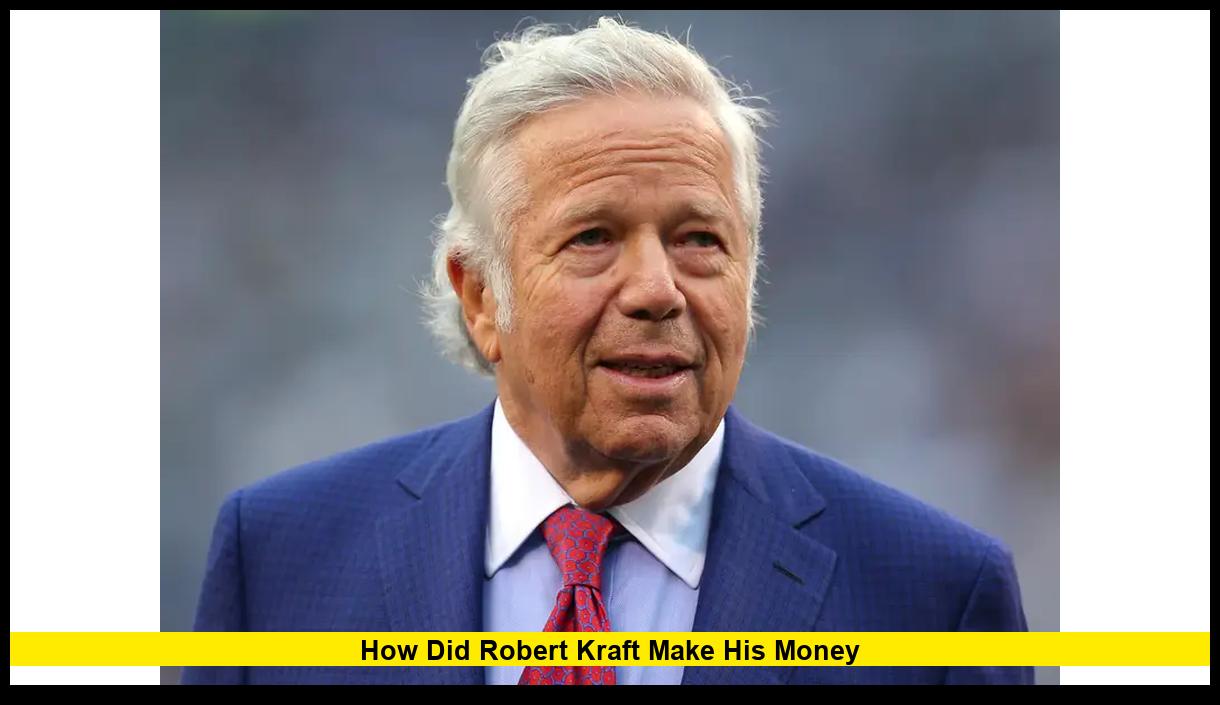
Understanding how did Robert Kraft make his money requires looking far beyond his public identity as the owner of the New England Patriots. While his NFL success made him globally recognizable, the foundation of his fortune was built decades earlier through disciplined business strategy, calculated risk-taking, and long-term investment planning. Robert Kraft’s wealth did not come from a single breakthrough moment. Instead, it developed through a series of deliberate moves across manufacturing, global trade, real estate, and professional sports.
As of today, Robert Kraft remains one of the wealthiest and most influential figures in American sports and business. His fortune reflects sustained growth rather than short-term gains, shaped by industries that reward scale, efficiency, and patience. His story offers a rare look at how industrial wealth can evolve into sports empire ownership while retaining private control.
Early Life and Business Mindset
Robert Kenneth Kraft was born in Brookline, Massachusetts, and raised in a working-class household that emphasized education, discipline, and financial responsibility. From an early age, Kraft was exposed to the realities of business through family influence. His father worked in manufacturing, which helped Kraft understand production cycles, cost structures, and the importance of operational efficiency.
Education played a major role in shaping Kraft’s approach to wealth creation. He attended Columbia University, where he developed a strong interest in economics and leadership. He later earned an MBA from Harvard Business School, a milestone that sharpened his analytical skills and exposed him to advanced business frameworks. These academic experiences gave Kraft a structured way to think about capital allocation, leverage, and long-term value creation.
Even before achieving major financial success, Kraft demonstrated a willingness to take responsibility and make independent decisions. This mindset would later become essential to how he built and protected his wealth.
Entering the Paper and Packaging Industry
The first major answer to how did Robert Kraft make his money lies in the paper and packaging business. Kraft entered this industry through Rand-Whitney Group, a paper and packaging company connected to his family by marriage. Rather than remaining a passive participant, Kraft took an active role in management and strategy.
In the late 1960s and early 1970s, Kraft used a leveraged buyout structure to gain control of the company. This decision involved significant risk. Leveraged buyouts rely on borrowed capital, meaning the business must generate consistent cash flow to remain stable. Kraft believed the demand for packaging materials would remain strong due to growth in consumer goods, shipping, and industrial production.
His assessment proved correct. Under his leadership, Rand-Whitney expanded production capacity, improved operational efficiency, and secured long-term contracts. These changes stabilized revenue and improved margins. Over time, the company became one of the largest privately held paper and packaging businesses in the United States.
This phase of Kraft’s career established the financial base that made everything else possible.
Building Wealth Through Industrial Consistency
Unlike technology startups or speculative investments, the paper and packaging industry rewards consistency. Kraft recognized this early. He focused on scaling operations rather than chasing short-term profits. His companies reinvested earnings into infrastructure, logistics, and workforce development.
By controlling costs and maintaining reliable output, Kraft ensured steady cash flow even during economic downturns. This stability allowed him to accumulate capital while avoiding excessive volatility. It also gave him access to favorable financing terms, which would later support expansion into new markets.
The industrial sector rarely produces overnight billionaires, but it creates durable wealth. Kraft understood that patience was an advantage, not a limitation.
Founding International Forest Products
One of the most important steps in understanding how did Robert Kraft make his money was his decision to expand beyond domestic manufacturing into global trade. In the early 1970s, Kraft founded International Forest Products, a commodities trading company focused on paper, pulp, and wood products.
At the time, global trade in forest products was fragmented and inefficient. Kraft saw an opportunity to act as an intermediary between producers and buyers across different regions. He invested heavily in logistics, market intelligence, and international relationships.
International Forest Products grew rapidly as global demand for paper products increased. The company handled large-volume transactions and benefited from price fluctuations in global markets. Unlike manufacturing, which depends on fixed assets, trading offered higher margins when executed well.
This business significantly increased Kraft’s personal wealth and diversified his income streams. It also positioned him as a global player rather than a regional industrialist.
Formation of The Kraft Group
As his portfolio expanded, Kraft consolidated his businesses under a single holding structure known as The Kraft Group. This move allowed him to centralize management, streamline decision-making, and allocate capital more efficiently.
The Kraft Group became the primary vehicle through which he controlled manufacturing operations, trading activities, real estate investments, and later sports franchises. This structure reduced operational risk and allowed profits from one division to support growth in another.
The holding company model also provided privacy. Many of Kraft’s businesses remained privately held, allowing him to avoid public market pressure and maintain long-term control.
Early Sports Investments
Long before acquiring an NFL team, Kraft showed interest in professional sports as a business opportunity. He purchased a tennis franchise in the 1970s, gaining firsthand experience in sports operations, fan engagement, and media rights.
These early investments did not define his wealth, but they taught valuable lessons. Kraft learned how sports franchises generate revenue through broadcasting, sponsorships, and ticket sales. He also learned how poor management can destroy value.
This experience shaped his later approach to owning a football team.
Strategic Acquisition of Stadium Assets
Before buying the New England Patriots, Kraft made a crucial move that many observers overlooked. He acquired control of the stadium where the team played. This decision gave him leverage over the franchise and prevented relocation.
By owning the stadium, Kraft controlled a critical asset. This position eventually allowed him to negotiate the purchase of the team itself. It also demonstrated his understanding of infrastructure value in sports economics.
This step illustrates a recurring theme in how did Robert Kraft make his money: owning essential assets rather than just operating businesses.
Purchasing the New England Patriots
In the mid-1990s, Kraft purchased the New England Patriots for a price that reflected the team’s limited success at the time. The acquisition was widely viewed as risky. The franchise struggled on the field and lacked strong brand power.
Kraft approached ownership as a long-term investment. He invested in facilities, management, and organizational stability. He focused on building a culture that emphasized discipline and accountability.
Over time, the team transformed into one of the most successful franchises in sports history. This success dramatically increased the team’s valuation.
How Team Success Translated Into Wealth
The Patriots’ on-field success directly influenced Kraft’s net worth. Championships increased merchandise sales, ticket demand, and sponsorship value. National exposure strengthened the team’s brand.
Media rights deals across the league raised franchise values, benefiting all owners. As one of the most successful teams, the Patriots became a premium asset.
Kraft’s wealth grew not because he sold the team, but because he held it while its value appreciated.
Developing Stadium and Entertainment Complexes
Kraft expanded the Patriots’ economic footprint by developing a modern stadium and surrounding entertainment complex. This project created new revenue streams through retail, dining, and events.
Unlike traditional stadiums used only on game days, the complex operates year-round. This diversification increased profitability and reduced reliance on football alone.
Real estate development became another pillar of Kraft’s wealth strategy.
Partial Monetization Without Loss of Control
In recent years, Kraft has monetized a portion of his sports holdings by selling a minority stake while retaining control. This move allowed him to unlock liquidity without sacrificing influence.
The transaction reflected the enormous increase in franchise valuation since the original purchase. It also highlighted the maturity of sports ownership as an investment class.
This step reinforces how how did Robert Kraft make his money continues to evolve even after decades of success.
Net Worth Structure and Asset Allocation
Robert Kraft’s wealth is distributed across several major categories:
- Industrial manufacturing and packaging
- Global commodities trading
- Professional sports ownership
- Real estate development
- Private investments
This diversification reduces risk and ensures consistent income. No single business defines his fortune, though sports ownership represents the most visible asset.
Philanthropy and Wealth Deployment
Kraft has committed a significant portion of his wealth to philanthropic causes. His giving focuses on education, healthcare, social justice, and community development.
While philanthropy does not generate income, it reflects long-term planning. Kraft’s charitable initiatives are structured for sustainability, mirroring his business philosophy.
Leadership Style and Decision-Making
Kraft’s success is closely tied to his leadership style. He favors experienced management, clear accountability, and data-driven decisions. He avoids excessive publicity and rarely reacts impulsively.
This disciplined approach explains why his wealth has grown steadily over decades rather than fluctuating dramatically.
Lessons From Robert Kraft’s Wealth Journey
The story of how did Robert Kraft make his money offers several key lessons:
- Build wealth in stable industries before pursuing high-profile investments
- Control critical assets rather than relying on third parties
- Diversify income sources to reduce risk
- Take a long-term view and avoid speculative behavior
- Reinvest profits strategically
These principles apply beyond sports and manufacturing. They reflect a universal approach to sustainable wealth creation.
Why Robert Kraft’s Fortune Endures
Many wealthy individuals rise quickly and fade just as fast. Kraft’s fortune has endured because it is grounded in fundamentals. His businesses produce tangible goods, essential services, and durable brands.
Even economic downturns have had limited impact on his overall net worth. This resilience distinguishes him from wealth built on trends or hype.
How Did Robert Kraft Make His Money: Final Perspective
So, how did Robert Kraft make his money? He built it methodically, starting with industrial businesses that generated reliable cash flow. He expanded into global trade to increase scale and margins. He diversified through a private holding company. He invested in professional sports at the right moment and held those assets as their value multiplied.
His wealth is the result of planning, patience, and control rather than luck.
Robert Kraft’s journey continues to evolve, and his financial story remains one of the most instructive examples of long-term wealth creation in modern American business. Stay engaged, share your perspective, and keep watching how enduring business strategies shape the future.