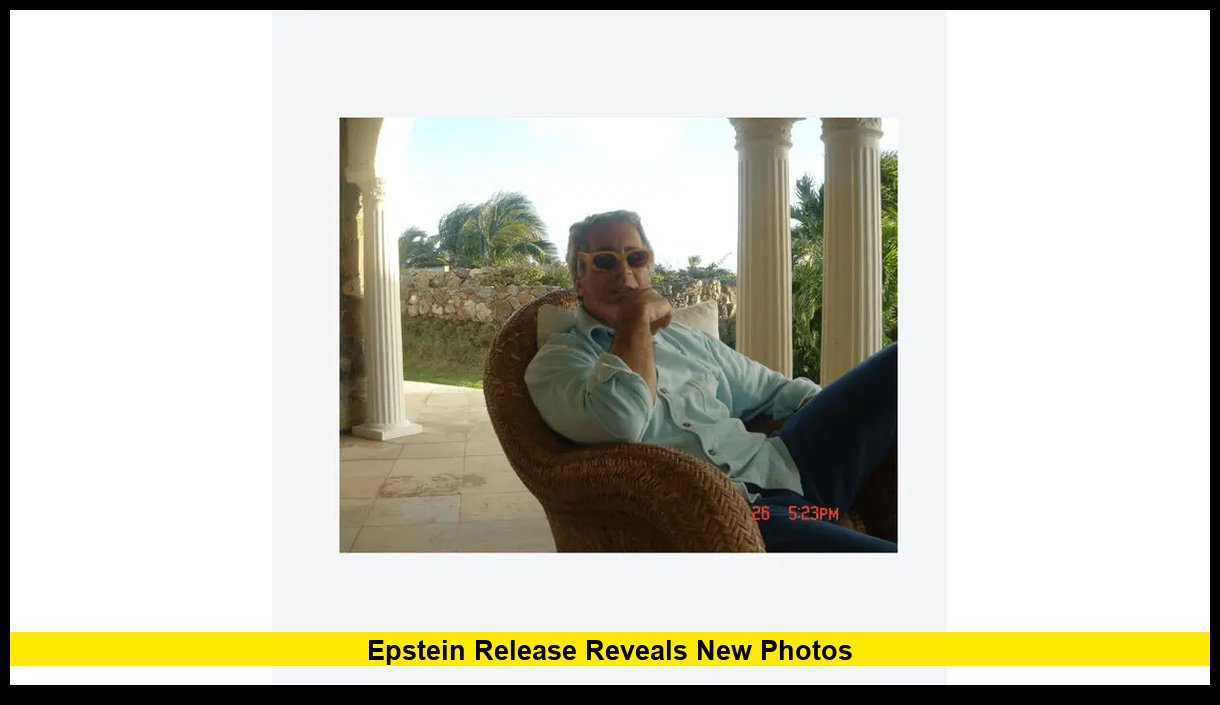
Epstein Release Reveals New Photos in a sweeping public disclosure that has brought previously unseen images into the public domain, intensifying national attention on one of the most scrutinized criminal cases in modern U.S. history. The newly released material includes photographs collected during federal investigations, estate inventories, and court-ordered disclosures that had remained sealed or unpublished until now. These images form part of a broader transparency effort driven by recent legal requirements and sustained public demand for accountability.
The release marks a significant moment in the ongoing examination of Jeffrey Epstein’s activities, associations, and the institutional handling of his case. While Epstein died in federal custody in 2019, the release of these photos demonstrates that public interest has not faded. Instead, it has grown stronger as new material continues to surface through lawful disclosure processes.
What the New Photo Release Includes
The latest disclosure contains hundreds of images that were not previously accessible to the public. These photos come from a combination of seized digital files, physical photographs cataloged during investigations, and materials held by the Epstein estate under court supervision.
The images fall into several broad categories:
- Photographs of Jeffrey Epstein with well-known public figures
- Group images taken at private residences and social gatherings
- Undated candid photos from Epstein’s properties
- Images of travel documents and identification materials, many redacted
- Photographs labeled or cataloged during investigations, some partially obscured to protect victims
The release does not allege new crimes. Instead, it expands the public record by showing what investigators collected and preserved during years of legal proceedings.
Why These Photos Were Released Now
The timing of the release reflects recent changes in U.S. law and increased congressional pressure for transparency. A federal requirement now mandates the public release of unclassified investigative materials related to Epstein, with appropriate protections for victims and minors.
The Department of Justice has acknowledged that it must balance transparency with legal and ethical obligations. As a result, the disclosure occurred in stages rather than all at once. The newly released photos represent one of the largest single additions to the public Epstein record since his death.
Lawmakers from both major parties have stated that the public has a right to understand how Epstein operated, who surrounded him socially, and how institutions responded to his crimes.
High-Profile Figures Appearing in the Images
One of the most discussed aspects of the release involves photos showing Epstein in the company of prominent individuals. These include politicians, business leaders, academics, entertainers, and media figures.
It is important to state clearly that:
- Appearance in a photograph does not indicate criminal activity
- No new charges have been filed based solely on these images
- Many photos lack dates, locations, or contextual details
The images reflect Epstein’s access to influential circles, a fact already documented through flight logs, testimony, and prior disclosures. The photos add visual context but do not, by themselves, establish wrongdoing.
How the Photos Were Cataloged
Investigators cataloged these images using standardized procedures. Each photo received an identifying label, and many were stored alongside notes describing where they were found and how they were obtained.
Some images remain partially redacted. These redactions serve several purposes:
- Protecting the identities of victims
- Preventing the release of explicit content
- Preserving privacy where legally required
Officials have confirmed that redactions were applied narrowly and reviewed multiple times before release.
Public Reaction Across the United States
The reaction to the disclosure has been immediate and intense. Social media platforms, cable news programs, and online forums have filled with discussion, analysis, and debate.
Public response has generally fallen into three categories:
- Calls for Full Transparency
Many Americans believe all remaining Epstein-related materials should be released as soon as legally possible. - Concerns About Misinterpretation
Legal experts and advocates warn that photos without context can be misleading and should be interpreted cautiously. - Renewed Focus on Institutional Accountability
The release has reignited questions about how Epstein avoided prolonged prosecution for years.
Despite differing opinions, there is broad agreement that the release represents a major step toward openness.
The Legal Framework Behind the Disclosure
The disclosure occurred under a legal framework designed to prevent secrecy in cases involving widespread public harm. Under this framework, federal agencies must make non-classified materials available once investigations conclude, subject to victim protection laws.
The Department of Justice has stated that additional materials may be released in future phases. Officials have emphasized that the process is ongoing and methodical rather than complete.
What the Photos Do Not Show
Equally important is what the images do not provide.
They do not:
- Prove criminal conduct by individuals pictured
- Establish timelines of illegal activity
- Replace witness testimony or court findings
The photos serve as documentation, not verdicts. Legal determinations remain based on evidence evaluated in court, not public interpretation of images.
Impact on Survivors and Advocacy Groups
Survivor advocacy organizations have responded cautiously to the release. Many support transparency but stress the importance of protecting victims from further harm.
Some advocates note that repeated media cycles can retraumatize survivors. Others argue that public disclosure helps expose systemic failures and prevents similar abuse in the future.
Federal officials have stated that victim privacy remains a guiding principle in every release decision.
Why Interest in Epstein Remains Strong
Several factors explain why Epstein-related disclosures continue to draw national attention:
- The scale of abuse and number of victims
- Epstein’s wealth and influence
- His connections across political and cultural boundaries
- Questions surrounding his death in custody
The new photos reinforce existing concerns rather than introduce entirely new narratives.
How This Release Fits Into the Broader Epstein Record
Since Epstein’s arrest and death, thousands of pages of documents have been released through lawsuits, settlements, and court orders. These include flight logs, email excerpts, and deposition transcripts.
The latest photo release complements those records by adding visual evidence of Epstein’s social world. Together, these materials form a more complete historical archive.
Media Responsibility and Ethical Coverage
Journalists covering the release face ethical challenges. Publishing images without proper explanation can fuel misinformation. Responsible coverage requires clarity, restraint, and context.
Several media organizations have emphasized that the photos should be viewed as part of an investigative record, not as standalone proof of wrongdoing.
What Comes Next
Federal officials have indicated that the review of Epstein-related materials is ongoing. Future releases may include additional documents or images, depending on legal clearance.
Congressional committees continue to monitor compliance with disclosure requirements. Advocacy groups remain engaged, pushing for transparency while protecting victims.
The pace of future releases will depend on legal reviews rather than public pressure alone.
Why This Moment Matters
The Epstein release reveals new photos at a time when public trust in institutions remains fragile. Transparency in cases involving abuse of power plays a critical role in restoring confidence.
The release does not close the Epstein chapter. Instead, it adds clarity to a complex and troubling history that continues to raise important questions about accountability.
As the Epstein release reveals new photos and more information enters the public record, the conversation around justice, transparency, and responsibility continues to evolve—readers are encouraged to share their perspectives and stay informed as further updates emerge.