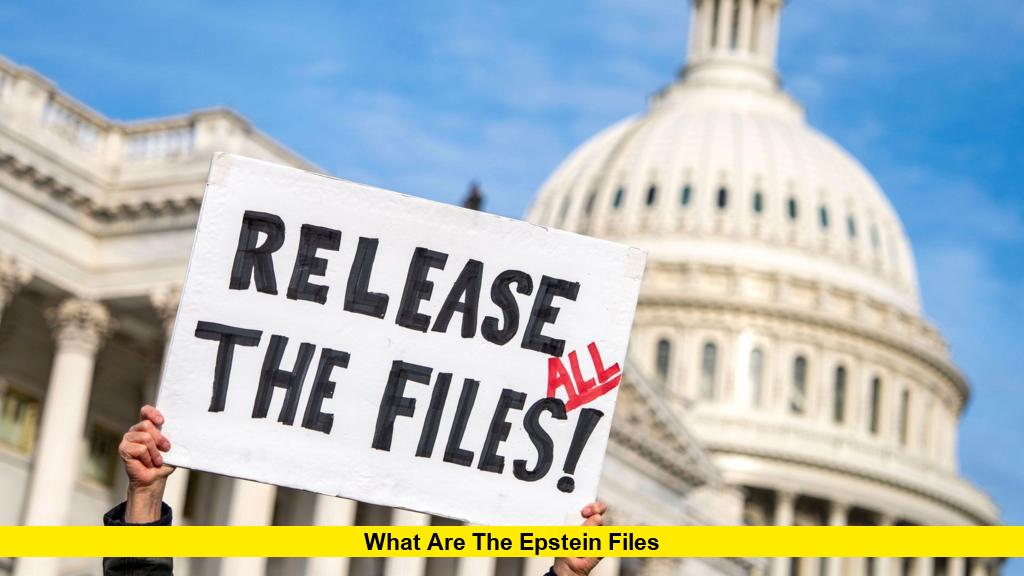
In recent weeks, renewed public scrutiny has centered on the phrase “epstein files what is it” as Congress and the Justice Department prepare to unseal long-hidden records related to the criminal investigations of financier Jeffrey Epstein. These documents, together referred to as the “Epstein files,” promise to shed light on decades of allegations about sexual abuse, trafficking, and possible high-level complicity. As December 2025 unfolds, the world braces for what could be one of the most consequential disclosures in U.S. criminal-justice history.
What Are the Epstein Files?
The “Epstein files” refer to a vast collection of records compiled by federal prosecutors, investigators, and law-enforcement agencies in connection with legal cases brought against Epstein and his longtime associate Ghislaine Maxwell. The materials include investigative reports, witness interviews, electronic and physical evidence, grand-jury transcripts, financial records, travel logs, property documents, communications, and more. Many of these documents relate to investigations conducted in New York, Florida, and abroad.
The files also reportedly include deeply disturbing content — including images and videos of abuse of minors, as well as other evidence seized during raids on Epstein properties. Historically, many of these materials have remained sealed and inaccessible to the public. Beyond concrete evidence, the files may contain references to a wide network of associates — feeding longstanding speculation that Epstein maintained a “client list,” potentially implicating powerful, high-profile individuals.
The Push for Transparency: A New Legal Mandate
After years of public pressure and legal obstruction, Congress in late 2025 passed legislation requiring the U.S. Department of Justice to make publicly available all unclassified records it holds related to Epstein’s investigations. The new law mandates the DOJ to release documents and communications in a searchable, downloadable format. Under the law’s timeline, the DOJ is expected to deliver unredacted lists of all government officials and politically exposed persons named in those records within a fixed window.
This landmark shift reflects the growing demand — from survivors, advocates, lawmakers, and the public — for full transparency into one of the most notorious criminal cases in modern U.S. history.
What’s Been Released — And What’s Still Hidden
In September 2025, a tranche of documents related to Epstein’s estate were made public. Those materials included personal estate documents, a birthday book, letters, and various papers — much of which had previously surfaced in leaks rather than being formally disclosed. While these provided some context, they offered little new investigative substance; rather, they functioned mostly as personal mementos and peripheral materials.
What many had hoped to see — substantive investigative evidence such as raid logs, witness statements, grand-jury materials, forensics, financial records, and communications — was not included. Until now, those remain sealed, withheld in large part due to bureaucratic protections, judicial orders, and concerns over victim privacy. The recent legal mandate, however, signals a possible turning point: the DOJ must now consider whether to begin releasing this heavier, more consequential material.
What Could Be Inside the Files: Potential Revelations
The documents expected to be released could dramatically expand public knowledge of how Epstein operated, exposing not only his abuse but also the structure, networks, and logistics of his alleged trafficking operation.
Among the types of evidence believed to be in store:
- Grand-jury transcripts from the original federal investigations (2005–2007) and subsequent 2019 proceedings. These could reveal sworn testimony from victims, witnesses, and possibly individuals previously unknown to the public.
- Financial and travel records, showing how Epstein funded his networks, financed properties, moved alleged victims across jurisdictions, and created a web of money and influence.
- Warrant returns, property searches, and investigative notes — illuminating the scope of raids on Epstein properties, what was seized (e.g., hard drives, documents, communications), and the physical and digital footprint of operations spanning multiple states and countries.
- Communications and documentation connecting Epstein to other individuals, potentially including business associates, fixers, or politically exposed persons. These connections are central to the long-held suspicion that Epstein used blackmail or coercion to protect powerful clients.
If fully released, such materials may finally provide the evidence necessary to substantiate longstanding allegations — or at least document who knew what, when, and how those networks operated.
The Stakes: Justice, Accountability, and History
The unsealing of the Epstein files represents more than just the release of documents. It marks a rare moment of possible reckoning — for survivors, for justice, and for the public’s right to know.
- For survivors, these files could offer validation, proof, and at long last a formal record of their accounts.
- For justice and accountability, the release might expose enablers, collaborators, and third parties who helped sustain the abuse — potentially prompting fresh investigations or charges.
- For public history, the disclosure could reshape how society understands one of the darkest scandals in recent memory — transforming rumors and leaks into documented fact, offering depth and context to a longstanding saga of abuse, wealth, power, and impunity.
The Challenges: Privacy, Protection, and Responsible Disclosure
Despite the promise, substantial hurdles remain. Many of the materials involve deeply sensitive content — including records about minors, victims’ identities, and evidence that, if mishandled, could traumatize survivors or expose them to renewed risk. As a result, the DOJ has signaled that certain items — especially those containing graphic evidence or survivor personal data — may be redacted or withheld, even under the new law.
Additionally, some records remain relevant to ongoing investigations or prosecutions. Releasing them broadly could compromise those efforts. And there’s concern that sensational material could be misused — distorted, taken out of context, or used for partisan or conspiratorial aims.
Critics of a full unfiltered release argue instead for a more nuanced approach: one that balances right-to-know with the dignity and safety of survivors. They insist on consultations with victims’ advocates and legal representatives before material becomes public.
What Happens Next — What to Watch In Coming Weeks
With the law now in place, the clock is ticking. Several key developments are expected soon:
- A full set of unclassified files may be made publicly available in a searchable, downloadable archive, if DOJ meets its deadlines.
- The DOJ is expected to publish unredacted lists of all government officials and politically exposed persons named in the files.
- Courts may consider motions from prosecutors to unseal additional materials from the prosecutions of Epstein and Maxwell — including search warrants, property-related evidence, financial and travel records, and photos.
- Survivor-advocate groups and attorneys may push for redactions, limited public naming, and rigorous privacy protections — potentially slowing or altering the scope of public release.
How the DOJ handles redactions, timing, and victims’ privacy will likely determine whether this release becomes a historic step toward transparency — or a chaotic exposure of deeply traumatic material.
Why This Moment Matters
What’s happening now could mark one of the most significant public disclosures in recent U.S. criminal-justice history. The term “epstein files what is it” has gained renewed importance because it represents a promise: that decades of secrecy might finally end. That promise carries weight — for survivors, for accountability, and for public understanding.
It also presents a test: whether justice and transparency can be balanced against privacy, dignity, and responsibility. If the files are released carefully, with appropriate protections, the public could gain unprecedented insight into a network of abuse that has long evaded full exposure.
If the release is mishandled, it risks retraumatizing survivors, compromising ongoing investigations, or fueling misuse of sensitive material.
But for now, the momentum has shifted. The law is in place. The clock is ticking. The world waits.
If you want to dig into the documents once they start coming out — or share your thoughts — stay tuned, stay engaged, and be ready to weigh what unfolds.